Decorative Perforated Aluminium Screens for Buildings
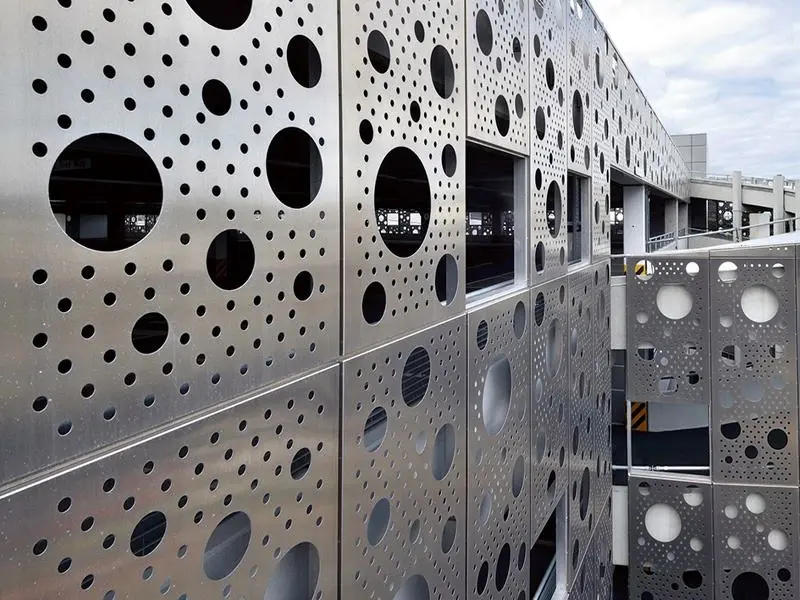
In modern construction, the exterior of a building is just as important as its structure. Decorative perforated aluminium screens for buildings offer a perfect mix of beauty and utility. These screens allow architects to create stunning visual effects while providing shade and privacy. Because aluminium is light and strong, it has become the top choice for decorative panels worldwide.
Technical Specifications: The Foundation of Quality
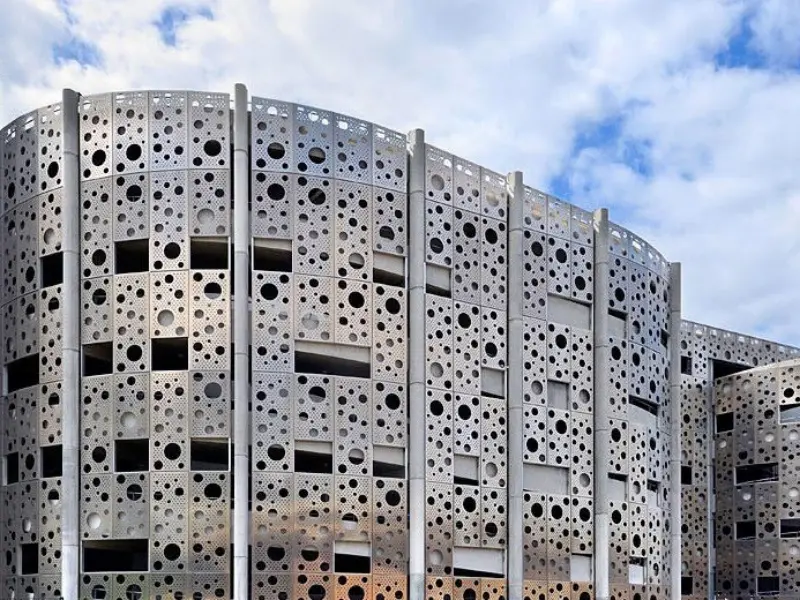
Choosing the right material is the first step. For decorative perforated aluminium screens for buildings, the alloy and temper determine how long the screen will last in outdoor conditions.
Material and Alloy Properties
| Feature | Specification | Detail |
|---|---|---|
| Common Alloys | Alloy 3003, 5052, 1100 | $$3003$$ is standard; $$5052$$ is for high-strength or coastal areas. |
| Temper (State) | H14, H24, H32 | These states provide the best balance of stiffness and workability. |
| Thickness | $$1.5mm$$ to $$5.0mm$$ | Thicker panels are used for large, self-supporting screens. |
| Surface Treatment | PVDF, Powder Coating, Anodized | PVDF is recommended for external facades to prevent fading. |
| Hole Shapes | Round, Square, Hexagon, CNC | Infinite custom shapes are possible with laser cutting. |
Different Types of Decorative Aluminium Screens
There is no “one size fits all” in design. An experienced manufacturer of decorative perforated aluminium screens for buildings offers various styles to suit different tastes.
1. Geometric Pattern Screens
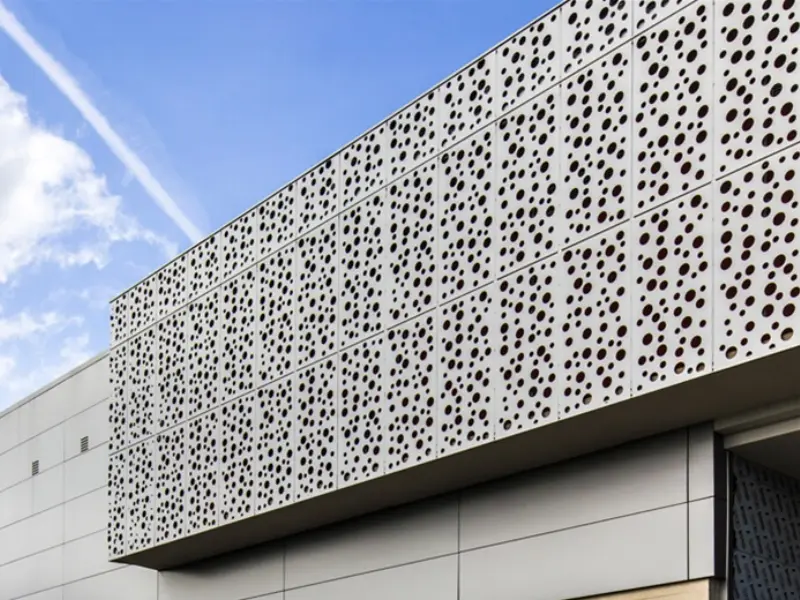
These screens use repeating shapes like circles, triangles, or hexagons. They create a clean, modern look. They are very popular for corporate offices and commercial centers.
2. Laser-Cut Organic Designs
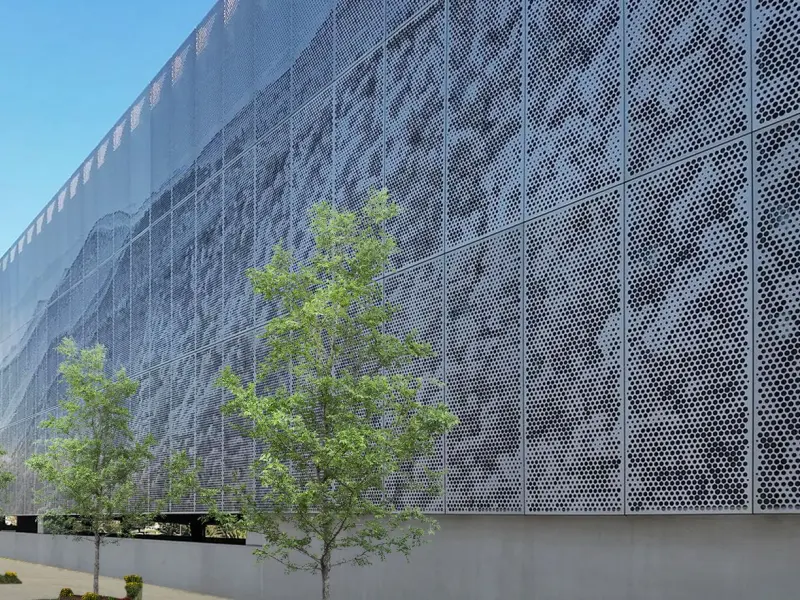
Using CNC laser technology, we can cut complex designs into the metal. These patterns often mimic nature, such as leaves, branches, or floral motifs. They add a soft, artistic touch to hard building structures.
3. Image Perforation (Pixel Art)
This is a high-tech option. By varying the size and density of small holes, we can recreate a photograph or a logo on the metal sheet. When viewed from a distance, the holes form a clear image.
4. 3D Textured Screens
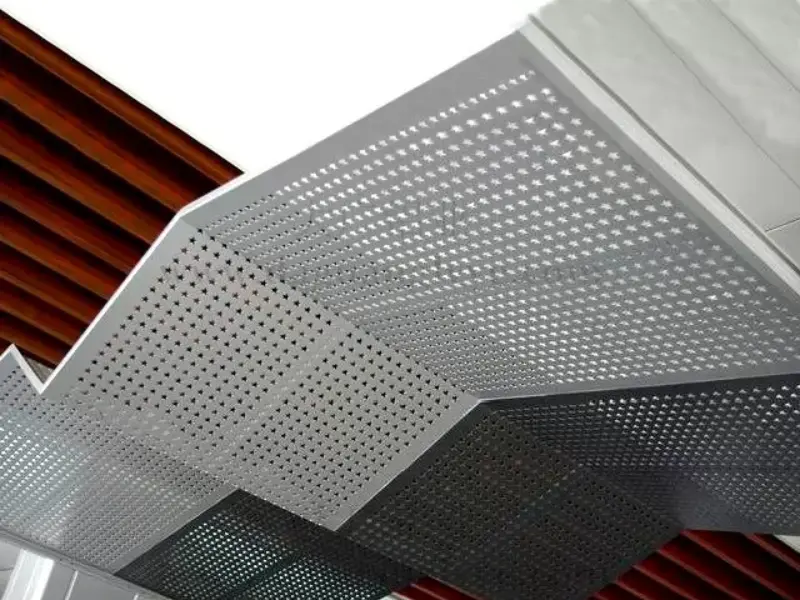
After perforation, the aluminium panels can be folded or curved. This adds depth to the building facade. The play of light and shadow on 3D screens changes throughout the day.
Key Applications: Where to Use Decorative Screens
The versatility of decorative perforated aluminium screens for buildings is seen in their many uses. They are found in residential, commercial, and public projects.
1. External Building Facades
This is the most common use. The screens act as a “second skin” for the building.
- Aesthetic Upgrade: They can turn an old concrete building into a modern masterpiece.
- Solar Shading: The screens block hot sunlight but let in natural light. This keeps the interior cool.
- Concealment: They are perfect for hiding ugly equipment like air conditioning units or water tanks.
2. Privacy Screens and Balconies
In crowded cities, privacy is a luxury.
- Residential Privacy: Use these screens on balconies to block the view from neighbors without losing the breeze.
- Light Filtration: They create beautiful dappled light patterns inside the home, similar to sitting under a tree.
3. Interior Design and Room Dividers
Decorative perforated aluminium screens for buildings are not just for the outside.
- Room Partitioning: Use them to separate a lobby from a dining area in a hotel or restaurant.
- Ceiling Panels: Perforated aluminium ceilings look stylish and help with acoustics by absorbing sound.
- Wall Art: Small decorative panels can be used as backlit wall art in high-end homes.
4. Fencing and Entrance Gates
Standard fences can be boring. Decorative aluminium panels provide a high-end alternative.
- Security with Style: They are strong enough to provide security but look much better than chain-link or bars.
- Durability: Unlike wood, aluminium will not rot. Unlike steel, it will not rust.
5. Car Park Ventilation
Car parks need constant airflow.
- Natural Air: Perforated screens allow car exhaust to escape while keeping the building secure.
- Visual Appeal: They transform a boring parking garage into an architectural feature.
Benefits of Using Aluminium for Decorative Screens
Why choose aluminium over other materials like wood, plastic, or steel?
1. Lightweight Nature
Aluminium is about $$1/3$$ the weight of steel. This means it is easier to transport and install. It also puts less stress on the building’s structure.
2. Weather Resistance
When treated with a PVDF coating, aluminium can withstand rain, snow, and intense UV rays for over $$20$$ years without corroding.
3. Fire Safety
Aluminium is a non-combustible material. For high-rise buildings, using fireproof decorative perforated aluminium screens for buildings is often a legal requirement.
4. Sustainability
Aluminium is $$100%$$ recyclable. Using it helps projects achieve “Green Building” certifications like LEED.
Standard Dimensions and Customization
| Item | Standard Value | Custom Options |
|---|---|---|
| Standard Panel Size | $$1220mm \times 2440mm$$ | Up to $$1500mm \times 6000mm$$ |
| Perforation Rate | $$20%$$ to $$50%$$ | From $$5%$$ to $$75%$$ open area |
| Weight (approx.) | $$4kg/m^2$$ to $$10kg/m^2$$ | Depends on thickness and hole pattern |
| Color Finish | RAL Colors | Metallic, Wood-grain, or Stone textures |
Installation Tips for Architects and Builders
To get the best result from your decorative perforated aluminium screens for buildings, follow these steps:
Check the Wind Load
If the screen is installed on a high floor, the wind can be very strong. Ensure the thickness of the panel ($$3mm$$ or higher) and the support frame are strong enough.
Consider the “Open Area”
The “open area” is the percentage of the panel that is made of holes. A higher open area lets in more air but provides less privacy. For solar shading, a $$30%$$ to $$40%$$ open area is usually best.
Spacing and Alignment
When installing multiple panels together, ensure the patterns align perfectly. This creates a seamless look across the entire wall.
Frequently Asked Questions
Can these screens be used near the ocean?
Yes. For coastal areas, we recommend using Alloy 5052 and a high-quality PVDF coating. This protects the screen from salt-air corrosion.
Do the screens require much cleaning?
No. Most dust is washed away by rain. For indoor screens, a simple wipe with a damp cloth every few months is enough.
Are the patterns limited to what is in your catalog?
Not at all. We can work with your CAD drawings to create any design you can imagine.
Decorative perforated aluminium screens for buildings
Decorative perforated aluminium screens for buildings are a smart investment for any construction project. They provide a unique identity to the architecture while solving practical problems like heat and privacy. With the right choice of alloy, such as 3003-H14, and a beautiful finish, these screens will remain a highlight of the building for decades.
Whether you are looking for a simple geometric screen or a complex laser-cut design, our team can help you find the perfect solution. Contact us today for a quote and technical advice.
Leave a Comment
You must be logged in to post a comment.