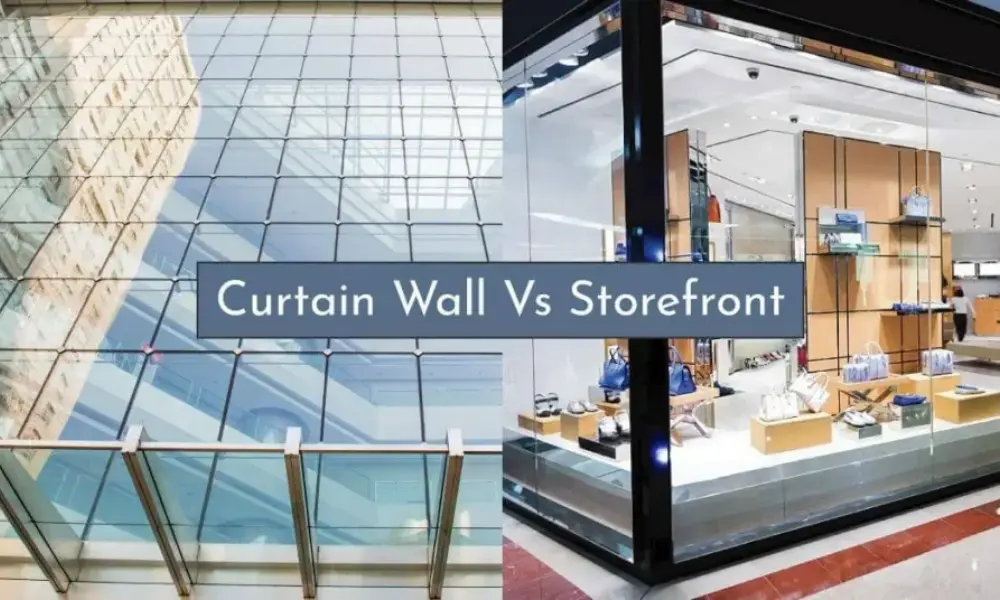
Aluminum Storefront vs. Curtain Wall
When planning a commercial building, choosing the right glass and metal system is vital for both looks and performance. Two of the most common options are aluminum storefronts and curtain walls. While they may look similar at a distance, they serve very different purposes.
Quick Comparison: Storefront vs. Curtain Wall
| Feature | Aluminum Storefront | Curtain Wall System |
|---|---|---|
| Typical Height | 1 Floor (Up to 12 ft) | Multi-story (Unlimited) |
| Water Drainage | Sill Flashing | Internal Weep System |
| Installation | Between Slabs/Openings | Front of Building Structure |
| Material Cost | Lower ($$) | Higher ($$$$) |
| Wind Resistance | Moderate | Very High |
Technical Specifications: Alloy and Temper
The strength of these systems comes from the quality of the aluminum. Most manufacturers use high-grade extrusions to ensure long-term durability.
Common Materials Used:
- Alloy Type: The most popular is 6063 Aluminum Alloy. It offers excellent surface finish and corrosion resistance. For higher structural needs, 6061 Alloy is sometimes used.
- Temper State: Usually T5 or T6.
- T5: Air-cooled and artificially aged, providing good strength.
- T6: Solution heat-treated and artificially aged, offering maximum hardness for high-load areas.
- Wall Thickness: Storefront profiles are usually 1.7 mm to 2.5 mm thick, while curtain wall mullions can range from 3.0 mm to over 5.0 mm depending on the building height.
Digitalized Specifications Table
| Metric | Storefront Standard | Curtain Wall Standard |
|---|---|---|
| Alloy Grade | 6063−T5 | 6063−T6 / 6106 |
| Profile Depth | 4 in (101.6 mm) | 6 in – 10 in (152 – 254 mm) |
| Glass Thickness | 6 mm – 25 mm | 24 mm – 50 mm |
| Anodized Layer | 10 – 15 microns | 20 – 25 microns |
Different Product Types to Consider
Aluminum Storefront Variations
- Center-Glazed Storefront: The glass is positioned in the center of the frame. This is the most common look for retail shops.
- Front-Glazed Storefront: The glass is pushed to the front. This creates a sleek, flat exterior look that mimics a curtain wall but at a lower cost.
- Thermal Break Storefront: Features a reinforced polyamide strip between the inner and outer aluminum frames to stop heat transfer, perfect for cold climates.
Curtain Wall Variations
- Pressure Plate System (Capped): You can see the aluminum frames on the outside. These frames (caps) hold the glass in place.
- Structural Silicone Glazing (SSG/Hidden Frame): The glass is bonded to the frame with high-strength silicone. From the outside, you see only glass, creating a “crystal” look.
- Unitized Curtain Wall: Pre-assembled panels made in a factory. These are used for skyscrapers where workers cannot easily install parts from the outside.
Similarities Between the Two Systems
Even though they serve different building heights, they share several qualities:
- Aesthetics: Both provide a modern, clean, and professional look.
- Finishes: Both can be powder-coated in any color or anodized for a metallic finish.
- Eco-Friendly: Both use aluminum, which is 100% recyclable and helps buildings earn “Green” certifications.
- Low Maintenance: Both require only basic cleaning and occasional seal inspection.
Application Fields
To help you decide, here are the common areas where each product is applied:
Where to use Aluminum Storefronts:
- Retail Shops: Ground-level boutiques and showrooms.
- Restaurants: Large glass entrances for cafes and diners.
- Office Entrances: Main lobby doors for small professional buildings.
- Schools: Ground-floor classrooms and administrative wings.
Where to use Curtain Walls:
- High-Rise Offices: Entire skyscraper facades.
- Hospitals: Where large glass areas are needed for natural healing light.
- Airports: Large terminals that must resist massive wind pressures.
- Public Museums: Where unique architectural shapes and large spans are required.
Which One Should You Choose?
The choice usually comes down to Height and Budget.
If your project is a single-story shop or a small office entrance, the aluminum storefront is the most cost-effective and logical choice. It is easy to install and handles ground-level water drainage perfectly.
If you are designing a building with multiple floors or a very large glass facade that faces heavy wind, you must use a curtain wall. While the initial cost is higher, it ensures the building remains waterproof and structurally sound as it moves and settles over time.
Aluminum Storefront vs Curtain Wall
Understanding the difference between an aluminum storefront system and an aluminum curtain wall system is important when choosing the right solution for your building. While both use aluminum frames and glass, they serve different purposes.
What Is an Aluminum Storefront?
An aluminum storefront is a lightweight framing system used mainly at ground level.
Features:
- Installed between floors (not spanning multiple levels)
- Supports only its own weight
- Simple structure and design
- Lower cost
Common Uses:
- Retail stores
- Restaurants
- Low-rise office buildings
What Is an Aluminum Curtain Wall?
An aluminum curtain wall is a non-structural exterior system that covers multiple floors of a building.
Features:
- Hangs from the building structure
- Does not carry floor loads
- Designed for high-rise buildings
- Advanced drainage and insulation systems
Common Uses:
- Office towers
- Airports
- Hotels
- High-rise residential buildings
Key Differences
| Feature | Aluminum Storefront | Aluminum Curtain Wall |
|---|---|---|
| Installation height | Low-rise (1–2 floors) | Multi-story / high-rise |
| Structural role | Supports its own weight | Hung from building structure |
| Installation method | Installed on-site | Stick or unitized systems |
| Cost | Lower | Higher |
| Performance | Basic | High (wind, water, thermal) |
| Design flexibility | Limited | Highly flexible |
Performance Comparison
| Performance Factor | Storefront | Curtain Wall |
|---|---|---|
| Wind resistance | Low to medium | High |
| Water resistance | Basic sealing | Advanced drainage system |
| Thermal insulation | Moderate | High (with thermal break) |
| Air tightness | Standard | Superior |
When to Choose Each System
Choose Aluminum Storefront if:
- Your project is low-rise
- You need a cost-effective solution
- The design is simple
Choose Aluminum Curtain Wall if:
- Your building is high-rise
- You need strong wind resistance
- You want a modern glass façade
- Energy efficiency is important
Leave a Comment
You must be logged in to post a comment.