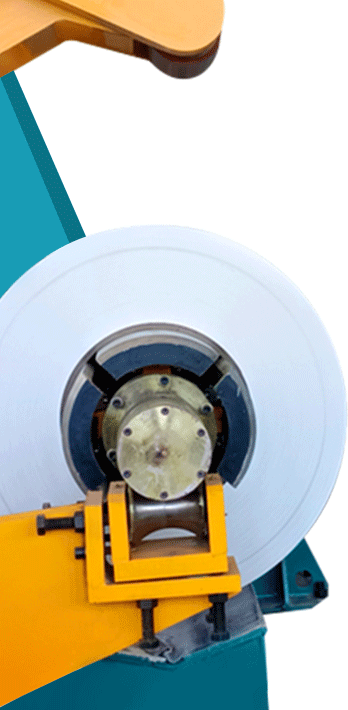
Perforated aluminum cladding is a popular material in modern architecture. It combines lightweight aluminum panels with precision perforation patterns, offering both functional and decorative benefits.
This material is widely used in building facades, ceilings, wall panels, and shading systems, helping architects achieve ventilation, light control, and aesthetic design.
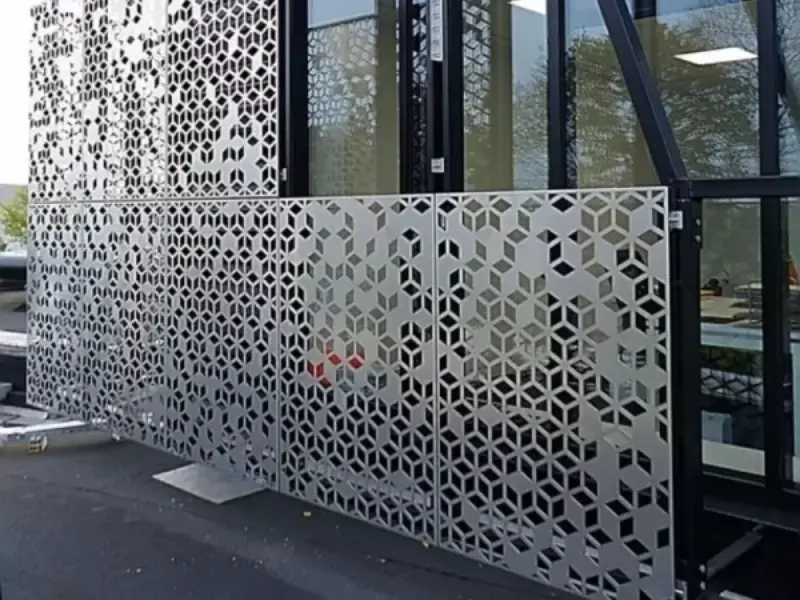
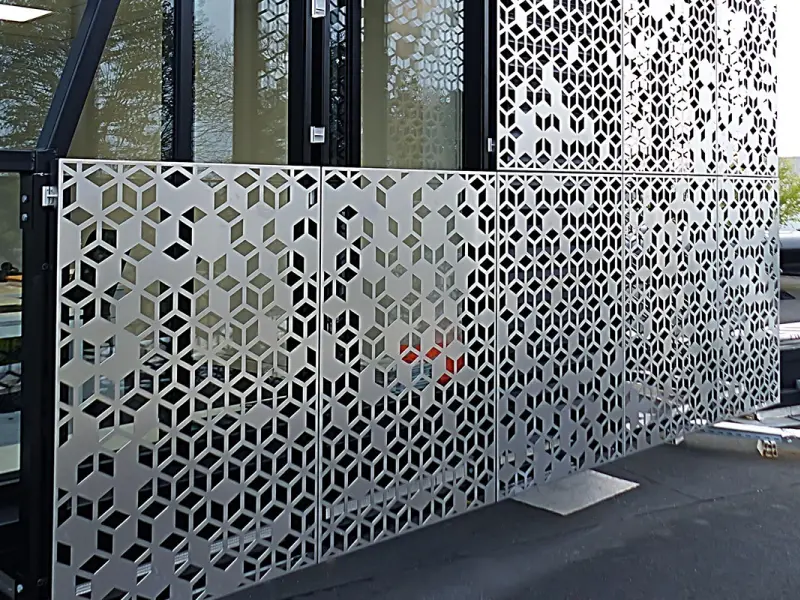
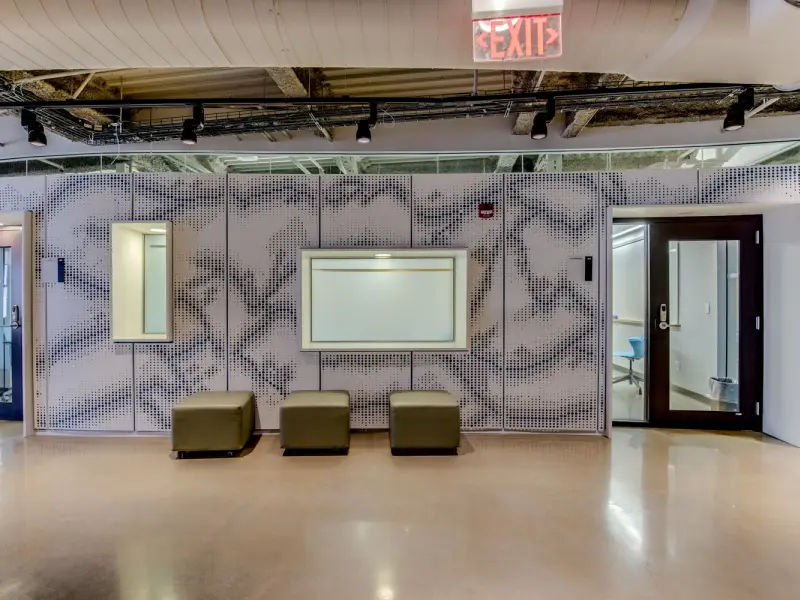
Types of Perforated Aluminum Cladding
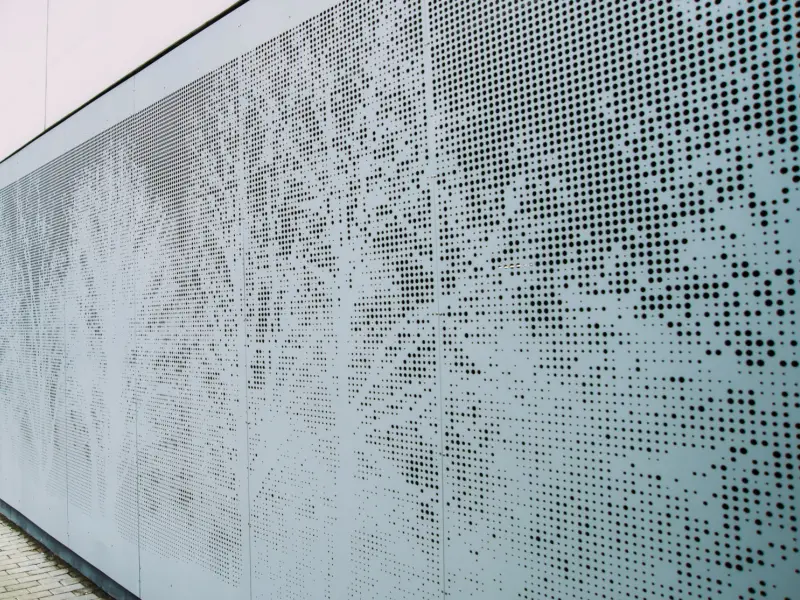
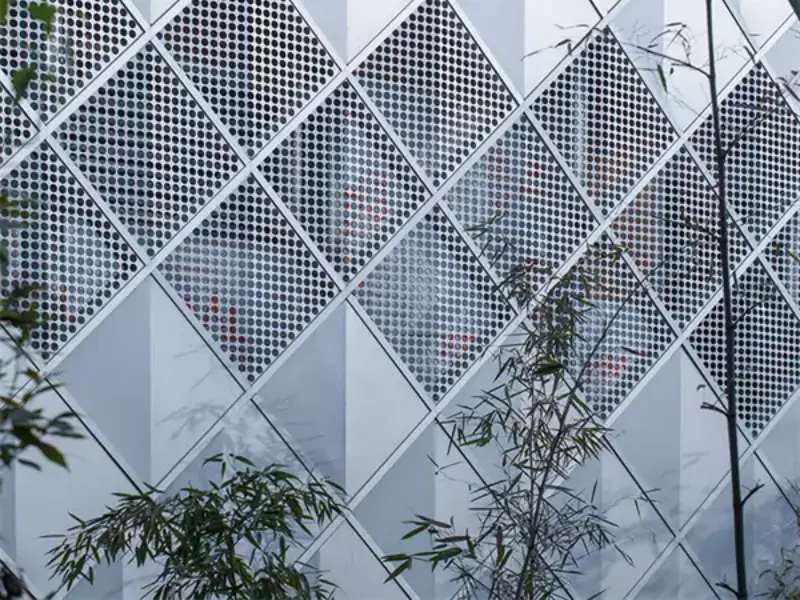
Perforated Aluminum Panel (Flat Panels)
Used for wall cladding and facades.
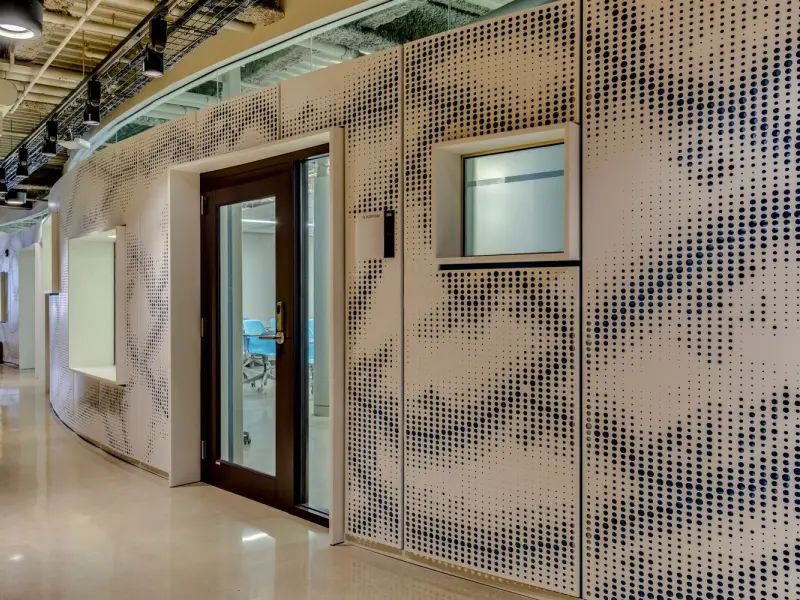
Perforated Metal Wall Panels
Installed on exterior or interior walls.
Perforated Aluminum Ceiling Panels
Used in offices, airports, and commercial buildings.
Perforated Aluminum Strip
Narrow strips for decorative or ventilation systems.
Perforated Aluminum Sheet 4×8
Standard size used in construction and fabrication.
Architectural Perforated Metal Panels
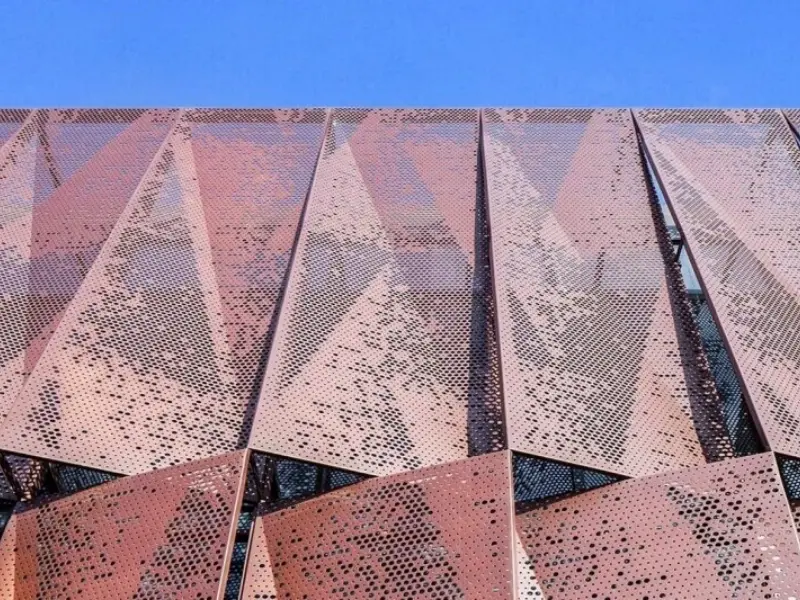
Perforated metal panels are widely used in architecture due to their versatility.
Design Benefits
- Creative facade patterns
- Sun shading effect
- Improved ventilation
- Unique visual identity
Aluminum Alloy Types for Cladding
| Alloy | Features | Application |
|---|---|---|
| 1050 | Soft, high purity | Decorative panels |
| 1060 | Good corrosion resistance | General use |
| 3003 | Strong and durable | Wall cladding |
| 5005 | Excellent surface finish | Architectural facades |
| 5052 | High strength | Outdoor structures |
Temper (Material Condition)
| Temper | Description | Use |
|---|---|---|
| O | Soft | Forming |
| H14 | Semi-hard | Standard panels |
| H24 | Stabilized | Better strength |
Perforation Patterns
| Pattern Type | Description |
|---|---|
| Round Hole | Most common |
| Square Hole | Modern design |
| Slotted | Linear airflow |
| Decorative | Custom patterns |
Standard Specifications
| Parameter | Range |
|---|---|
| Thickness | 0.5 – 3.0 mm |
| Panel Size | 1000 × 2000 mm / 1220 × 2440 mm |
| Hole Diameter | 1 – 20 mm |
| Open Area | 10% – 60% |
| Surface Finish | PVDF / Powder Coated / Anodized |
Perforated Aluminum Sheet 4×8 Details
| Specification | Value |
|---|---|
| Size | 4 × 8 ft |
| Thickness | 1.0 / 1.5 / 2.0 mm |
| Material | 3003 / 5052 |
| Finish | Coated / Anodized |
Surface Finishes
PVDF Coating
- High weather resistance
- Long lifespan
Powder Coating
- Cost-effective
- Wide color options
Anodized Finish
- Metallic look
- Corrosion resistant
Types of Perforated Aluminum Panels and Applications
Perforated aluminum products come in different forms to meet various architectural and industrial needs. Below are the most common types, with clear descriptions and specifications.
1. Perforated Aluminum Panel (Flat Panels)
Perforated aluminum flat panels are widely used for wall cladding and building facades. These panels offer a modern appearance while allowing airflow and light penetration. They are lightweight, corrosion-resistant, and easy to install, making them ideal for exterior decoration.
| Specification | Details |
|---|---|
| Thickness | 1.0 mm – 3.0 mm |
| Hole Shape | Round, square, slotted |
| Surface Finish | Powder coated, anodized, PVDF |
| Application | Facade, wall cladding |
2. Perforated Metal Wall Panels
Perforated metal wall panels are installed on both interior and exterior walls. They not only enhance aesthetics but also improve acoustic performance and ventilation. These panels are commonly used in commercial and public buildings.
| Specification | Details |
|---|---|
| Material | Aluminum, stainless steel |
| Thickness | 1.5 mm – 3.0 mm |
| Function | Sound absorption, airflow |
| Application | Interior & exterior walls |
3. Perforated Aluminum Ceiling Panels
Perforated aluminum ceiling panels are popular in offices, airports, shopping malls, and commercial buildings. They help with sound control and air circulation while providing a clean, modern ceiling design.
| Specification | Details |
|---|---|
| Thickness | 0.7 mm – 2.0 mm |
| Panel Size | 300×300 mm, 600×600 mm |
| Feature | Acoustic, lightweight |
| Application | Ceiling systems |
4. Perforated Aluminum Strip
Perforated aluminum strips are narrow-width products used for decorative elements or ventilation systems. They are flexible and easy to process, often used in HVAC systems or architectural trims.
| Specification | Details |
|---|---|
| Width | 10 mm – 200 mm |
| Thickness | 0.5 mm – 1.5 mm |
| Feature | Flexible, easy to cut |
| Application | Ventilation, decoration |
5. Perforated Aluminum Sheet 4×8
Perforated aluminum sheet in 4×8 ft size is a standard format widely used in construction and fabrication. It is easy to transport, cut, and install, making it a preferred choice for contractors and manufacturers.
| Specification | Details |
|---|---|
| Size | 4×8 ft (1220×2440 mm) |
| Thickness | 1.0 mm – 3.0 mm |
| Hole Pattern | Customizable |
| Application | Construction, industrial use |
These perforated aluminum products offer flexibility in design, function, and application. Choosing the right type depends on your project requirements, including strength, appearance, and ventilation needs.
Perforated Aluminum Cladding Fixing Details
Typical installation system includes:
- Aluminum frame structure
- Brackets and fasteners
- Expansion bolts
- Sealing materials
Installation Steps
- Install support frame
- Fix brackets to wall
- Mount perforated panels
- Adjust alignment
- Secure and seal
Applications of Perforated Aluminum Cladding
Main industries:
- Construction
- Architecture
- Interior design
Typical uses:
- Building facades
- Curtain walls
- Ceiling systems
- Sun shading panels
- Parking structures
- Decorative screens
Advantages of Perforated Aluminum Cladding
- Lightweight and strong
- Corrosion resistant
- Modern appearance
- Good ventilation
- Easy installation
- Custom design flexibility
Disadvantages of Aluminum Cladding
- Higher initial cost than some materials
- May require maintenance over time
- Limited insulation without additional layers
- Scratches possible on surface
What Material Is Used for Perforated Cladding?
Common materials include:
- Aluminum (most popular)
- Steel
- Stainless steel
- Composite panels
Aluminum is preferred due to:
- Lightweight
- Corrosion resistance
- Easy fabrication
Perforated Metal Panel Detail
Important design considerations:
- Hole size and spacing
- Open area percentage
- Panel thickness
- Structural support
- Wind load resistance
Perforated Aluminum Ceiling Panels
These panels are widely used indoors.
Benefits
- Sound absorption
- Air circulation
- Clean modern look
Applications
- Offices
- Airports
- Shopping malls
Aluminium Cladding Sheet Price Factors
Price depends on:
- Alloy type
- Thickness
- Surface finish
- Perforation pattern
- Order quantity
Product Types and Custom Options
Standard Panels
- 4×8 sheets
- Common thickness
Custom Panels
- Custom sizes
- Custom hole patterns
Decorative Panels
- Laser-cut designs
- Artistic patterns
Processing Capabilities
- CNC punching
- Laser cutting
- Bending and forming
- Surface coating
How to Choose the Right Perforated Aluminum Panel
Consider:
- Application (indoor or outdoor)
- Required strength
- Design pattern
- Budget
Reliable Supplier
Choosing a professional supplier ensures:
- Stable quality
- Accurate specifications
- Fast delivery
- Custom solutions
WORTHWILL ALUMINUM offers high-quality perforated aluminum cladding panels with full customization and global export experience.
What Is a Perforated Aluminum Sheet?
A perforated aluminum sheet is a metal panel with regular holes or patterns made by punching or laser cutting.
Common features:
- Uniform hole patterns
- Lightweight structure
- Decorative appearance
What Is Aluminum Cladding?
Aluminum cladding is a system where aluminum sheets are used to cover building surfaces such as walls or facades.
It provides:
- Protection against weather
- Improved insulation
- Modern appearance
When perforations are added, the panel also allows:
- Airflow
- Light transmission
- Acoustic performance
Modern Architectural Solution for Facades and Interiors
Perforated aluminum cladding is an ideal material for modern construction and design. It offers a balance of functionality, durability, and aesthetics.
With different alloys, patterns, and finishes available, it can meet a wide range of architectural and industrial needs.