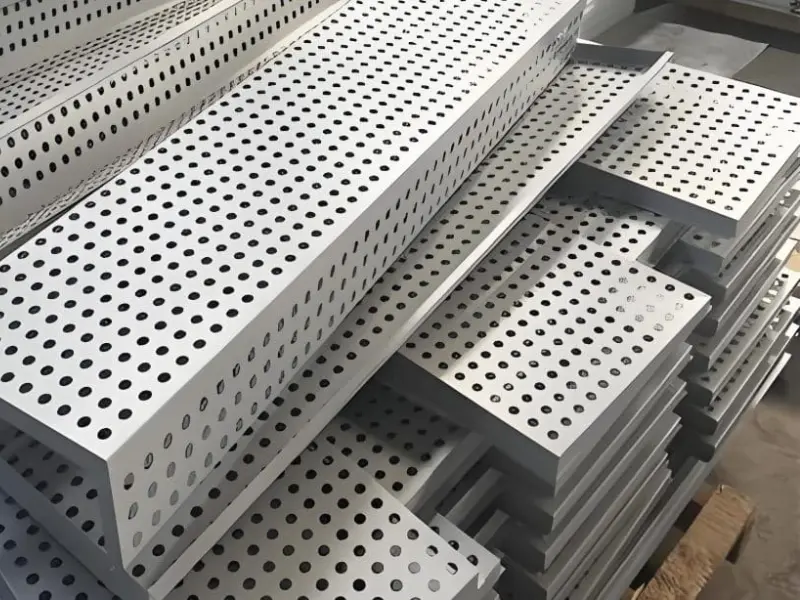
Perforated aluminium cladding is a decorative and functional building material made from aluminum sheets with precisely punched holes. The perforations can be round, square, slotted, hexagonal, or custom-designed. This type of cladding is widely used in modern architecture because it combines aesthetics, ventilation, sun shading, and durability.
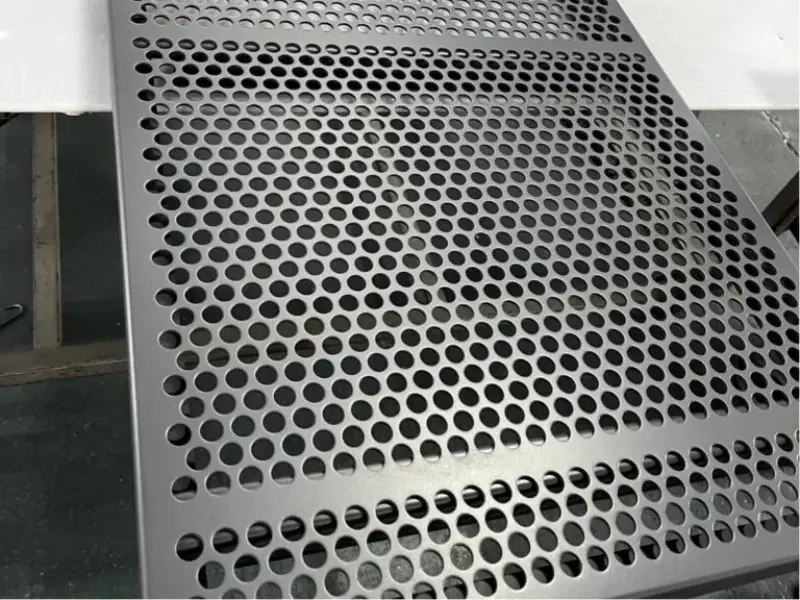
Compared with solid aluminum panels, perforated panels allow air and light to pass through while maintaining structural strength. Architects often use them to create attractive facades, privacy screens, parking structures, and decorative building envelopes.
Advantages of Perforated Aluminium Cladding
| Feature | Benefit |
|---|---|
| Lightweight | Reduces building load |
| Corrosion Resistant | Suitable for outdoor environments |
| Modern Appearance | Enhances architectural design |
| Ventilation | Improves airflow |
| Sun Control | Helps reduce heat gain |
| Custom Designs | Various hole patterns available |
| Easy Fabrication | Can be cut, bent, and formed |
| Recyclable | Environmentally friendly |
Common Aluminum Alloys for Cladding Panels
Different projects require different aluminum grades.
1100 Perforated Aluminium Cladding
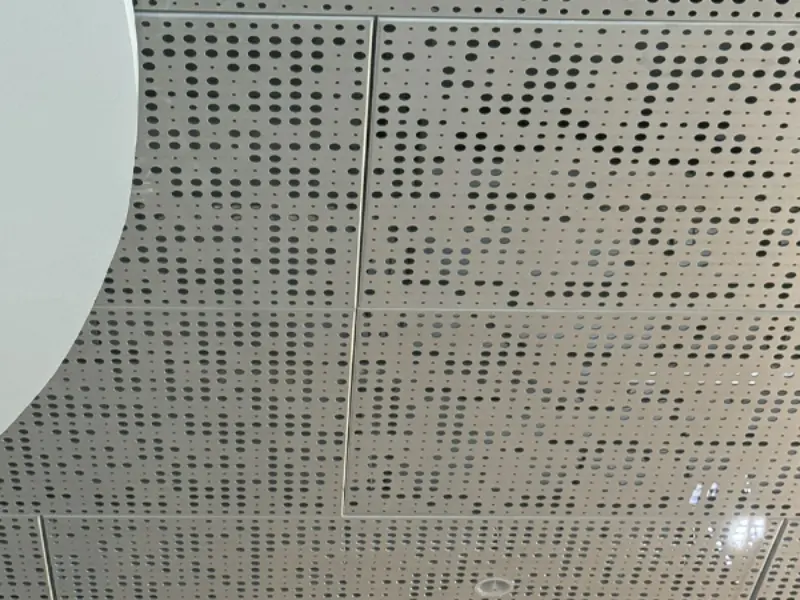
1100 aluminum offers excellent corrosion resistance and formability.
Suitable for:
- Interior decorative panels
- Ceiling systems
- Architectural features
| Property | Value |
|---|---|
| Alloy | 1100 |
| Temper | H14, H24 |
| Thickness | 1.0-3.0 mm |
3003 Perforated Aluminium Cladding
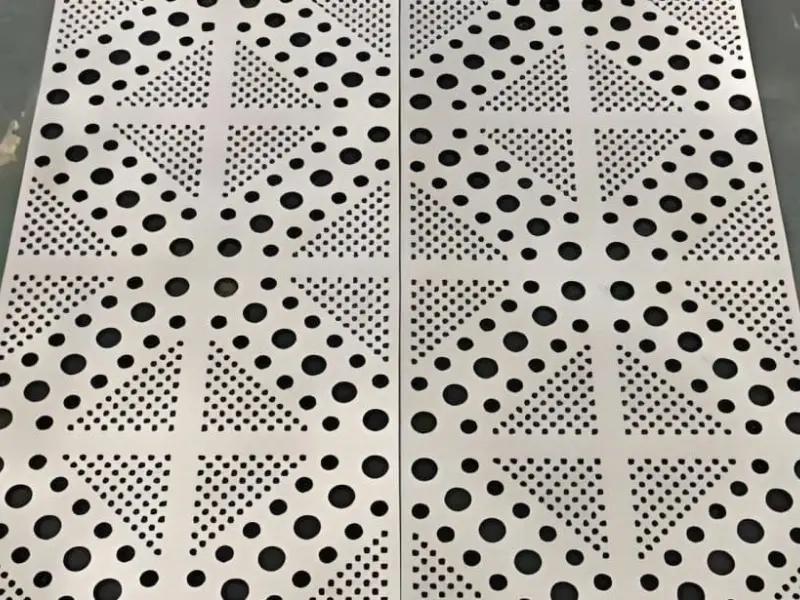
3003 is one of the most commonly used alloys in architectural applications.
Benefits:
- Good strength
- Excellent workability
- Competitive cost
| Property | Value |
|---|---|
| Alloy | 3003 |
| Temper | H14, H24 |
| Thickness | 1.0-4.0 mm |
5005 Perforated Aluminium Cladding
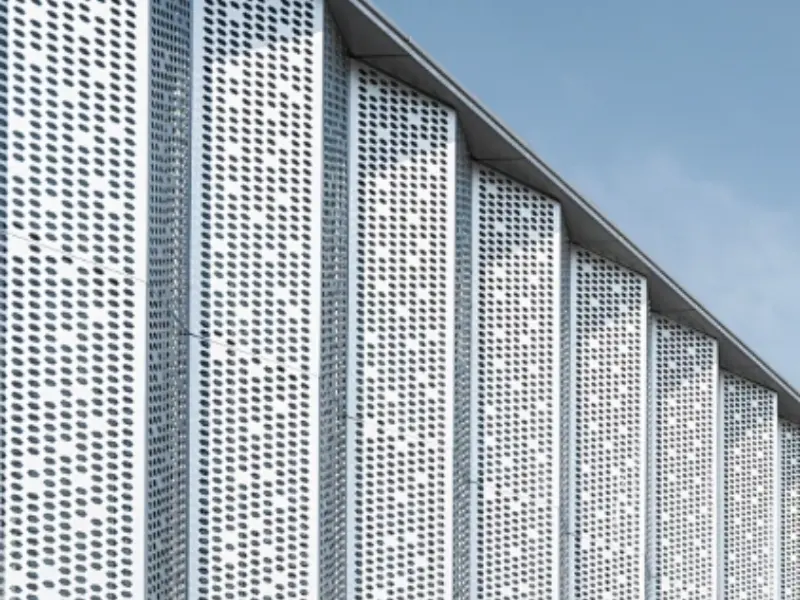
5005 alloy is widely selected for decorative facades.
Advantages:
- Smooth surface finish
- Excellent anodizing performance
- Good weather resistance
| Property | Value |
|---|---|
| Alloy | 5005 |
| Temper | H14, H24, H34 |
| Thickness | 1.5-5.0 mm |
5052 Perforated Aluminium Cladding
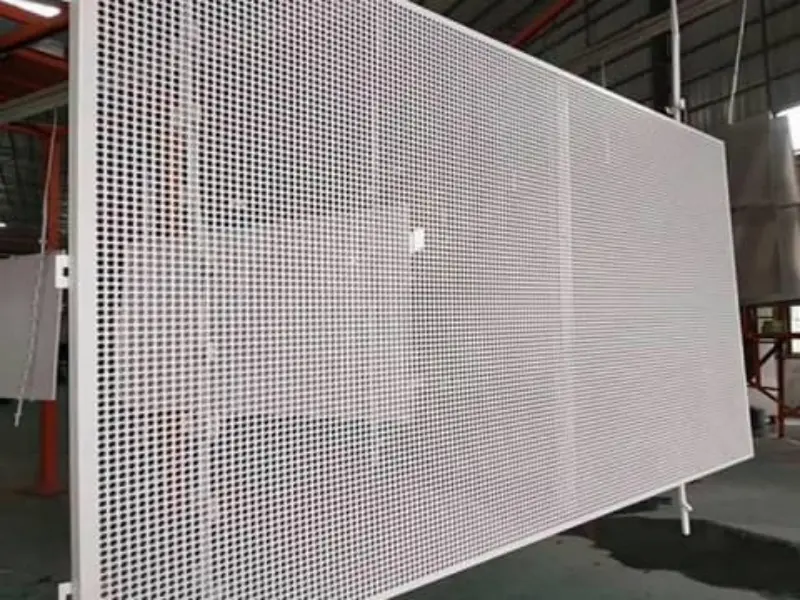
5052 aluminum provides higher strength and corrosion resistance.
Applications:
- Coastal buildings
- Marine environments
- Industrial facilities
| Property | Value |
|---|---|
| Alloy | 5052 |
| Temper | H32 |
| Thickness | 2.0-6.0 mm |
Available Temper Options
The temper affects mechanical properties and fabrication performance.
| Temper | Characteristics |
|---|---|
| O | Soft condition, easy forming |
| H14 | Moderate strength |
| H24 | Improved rigidity |
| H32 | Higher strength and durability |
| H34 | Enhanced hardness |
The correct temper depends on panel size, perforation rate, and installation requirements.
Standard Thickness Range
Perforated panels are available in various thicknesses.
| Thickness | Common Application |
|---|---|
| 1.0 mm | Interior decoration |
| 1.5 mm | Ceiling panels |
| 2.0 mm | Facade systems |
| 2.5 mm | Exterior cladding |
| 3.0 mm | Building screens |
| 4.0 mm | Parking structures |
| 5.0 mm | Large architectural facades |
| 6.0 mm | Heavy-duty applications |
Popular Hole Patterns
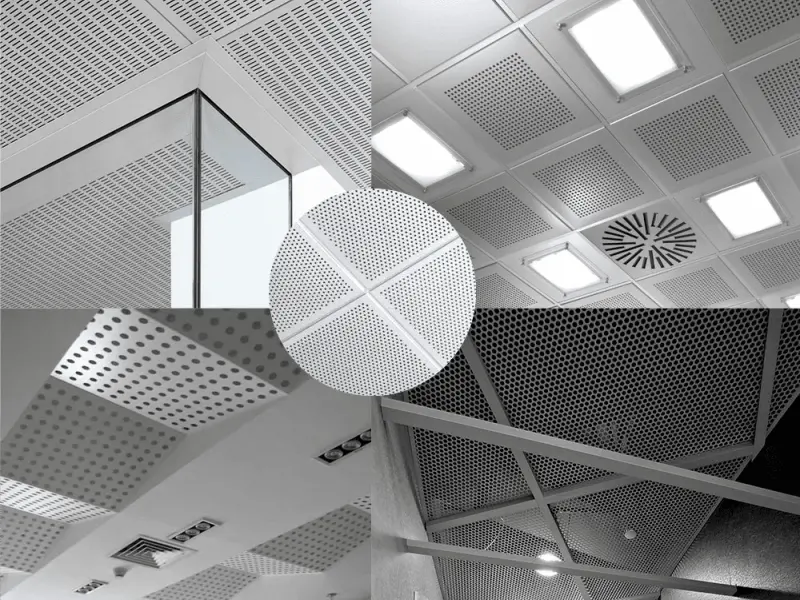
Round Hole Panels
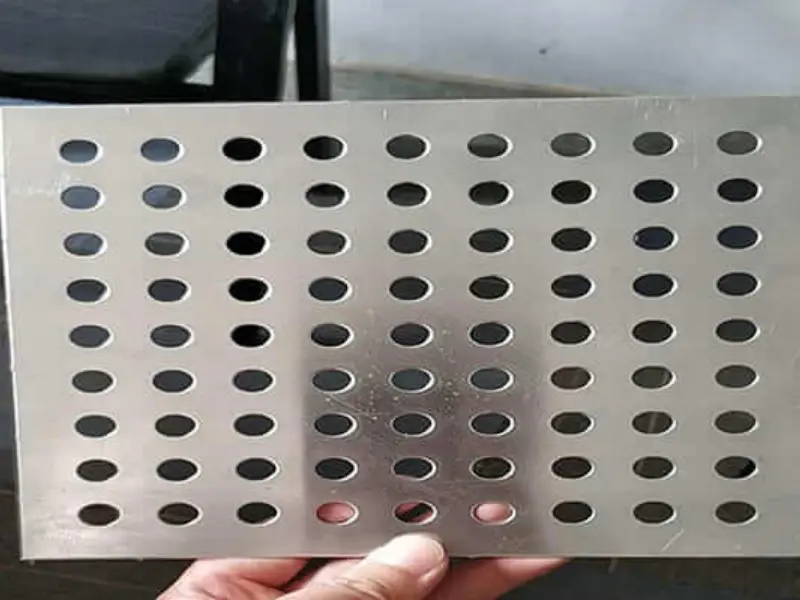
Round holes are the most common option.
Applications:
- Building facades
- Acoustic panels
- Sunshade systems
| Hole Diameter | Pitch |
|---|---|
| 2 mm | 4 mm |
| 3 mm | 5 mm |
| 5 mm | 8 mm |
| 8 mm | 12 mm |
| 10 mm | 15 mm |
Square Hole Panels
Square perforations create a modern geometric appearance.
Suitable for:
- Commercial buildings
- Retail centers
- Interior feature walls
Slotted Hole Panels
Long openings provide improved airflow.
Common uses:
- Ventilation systems
- Equipment enclosures
- Parking garages
Hexagonal Hole Panels
Hexagonal patterns offer a unique architectural effect.
Popular for:
- High-end facades
- Public buildings
- Landmark projects
Decorative Custom Patterns
Many architects choose customized perforation designs.
Options include:
- Company logos
- Artistic graphics
- Geometric designs
- Parametric patterns
- Customized architectural concepts
Open Area Options
The open area determines airflow and visibility.
| Open Area | Performance |
|---|---|
| 10% | High privacy |
| 20% | Decorative balance |
| 30% | Moderate airflow |
| 40% | Good ventilation |
| 50% | Maximum airflow |
| 60%+ | Architectural feature applications |
Surface Finishes Available
PVDF Coated Panels
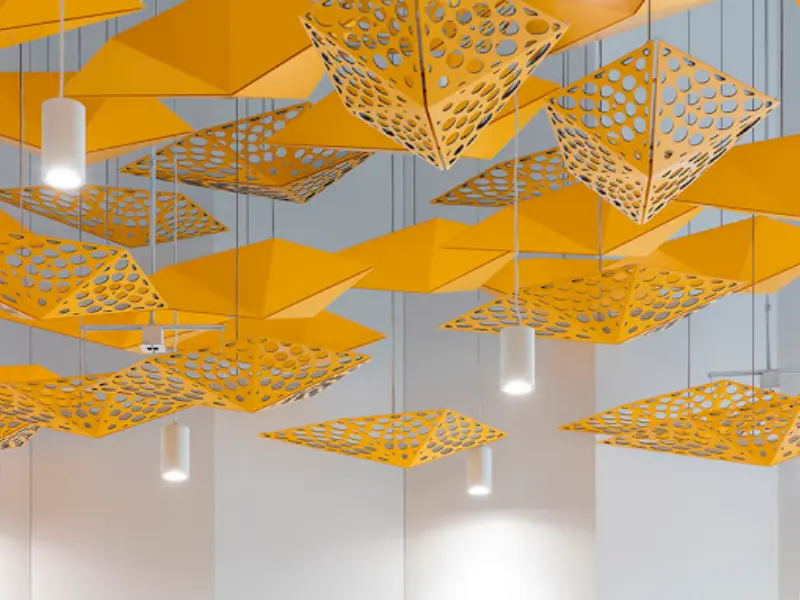
PVDF coating offers long-term weather resistance.
Suitable for:
- High-rise buildings
- Exterior facades
- Coastal environments
Polyester Coated Panels
A cost-effective solution for many projects.
Common uses:
- Commercial buildings
- Interior applications
- Decorative cladding
Anodized Aluminum Panels
Anodizing creates a durable oxide layer.
Benefits include:
- Improved corrosion resistance
- Metallic appearance
- Long service life
Powder Coated Panels
Powder coating provides a wide range of colors.
Popular colors:
- White
- Black
- Silver
- Grey
- Bronze
- Champagne
- Wood grain finishes
Typical Applications of Perforated Aluminium Cladding
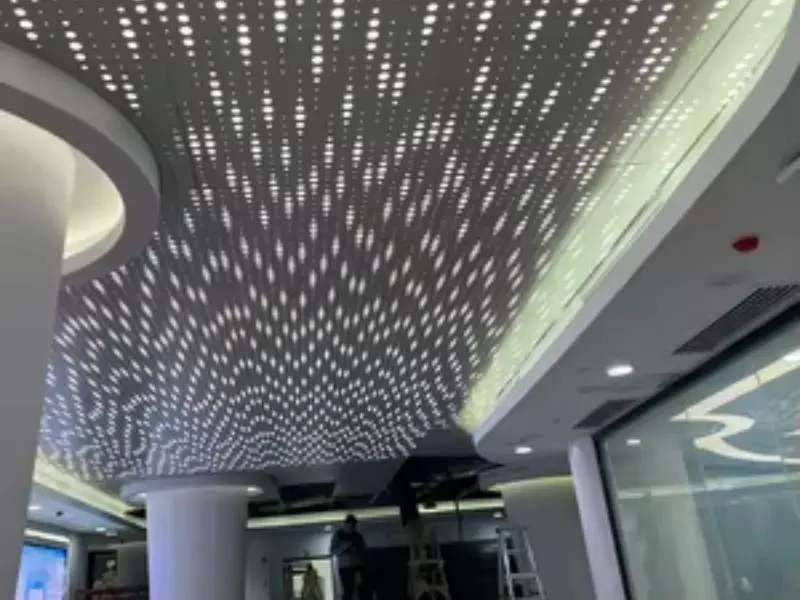
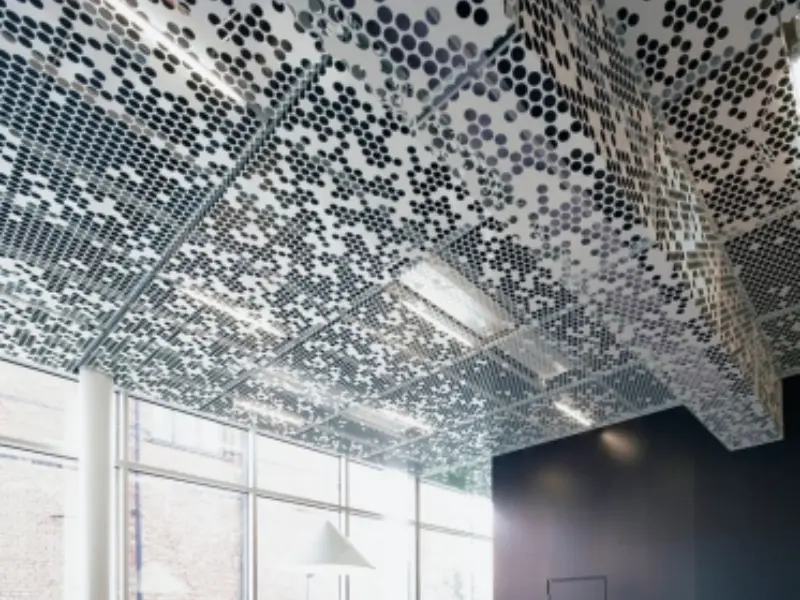
Building Facades
Perforated panels create visually attractive building exteriors.
Benefits include:
- Modern appearance
- Reduced solar heat gain
- Improved airflow
Parking Garage Screens
Parking structures require ventilation while maintaining aesthetics.
Advantages:
- Natural ventilation
- Reduced maintenance
- Attractive exterior appearance
Sunshade Systems
Perforated aluminum helps control sunlight.
Applications include:
- Office buildings
- Shopping malls
- Educational facilities
Balcony Screens
Many residential projects use perforated panels for privacy.
Benefits:
- Decorative effect
- Air circulation
- Increased safety
Ceiling Systems
Perforated cladding is widely used in suspended ceilings.
Applications:
- Airports
- Railway stations
- Commercial centers
- Exhibition halls
Acoustic Wall Panels
The perforated structure can improve sound absorption when combined with insulation materials.
Suitable for:
- Theaters
- Conference rooms
- Auditoriums
- Music venues
Comparison of Popular Alloys
| Alloy | Strength | Corrosion Resistance | Formability | Architectural Use |
|---|---|---|---|---|
| 1100 | Medium | Excellent | Excellent | Interior |
| 3003 | Good | Very Good | Very Good | General Facades |
| 5005 | Good | Excellent | Good | Decorative Facades |
| 5052 | High | Excellent | Good | Coastal Projects |
Perforated Cladding vs Solid Aluminum Panels
| Item | Perforated Panel | Solid Panel |
|---|---|---|
| Ventilation | Excellent | None |
| Sun Control | Good | Limited |
| Decorative Effect | High | Medium |
| Privacy | Adjustable | High |
| Weight | Lighter | Slightly Heavier |
| Design Flexibility | Excellent | Good |
Many architects combine both systems within the same project to achieve different visual effects.
Different Product Types of Perforated Aluminium Cladding
Suppliers make different types of perforated cladding to fit various design styles. Here are the most popular product types available in the market today.
Standard Geometric Perforated Panels
These panels feature simple, repeating patterns. The holes are punched in clean rows or staggered lines. The shapes include circles, squares, rectangles, and slots. They are clean, affordable, and work well for simple ventilation covers and solar screens.
Artistic and Image-Based Cladding
Modern punching machines use computer software to create custom designs. By using different hole sizes in different spots, the manufacturer can create pictures, company logos, or abstract patterns on the metal. These panels turn a simple wall into a stunning piece of art.
Corrugated and 3D Formed Perforated Panels
Instead of flat sheets, these panels have waves, folds, or three-dimensional shapes. The textured shape makes the cladding much stronger. It also creates beautiful light and shadow effects on the building facade throughout the day.
Prepainted and Anodized Finished Cladding
To protect the metal and add color, manufacturers apply special surface finishes:
- PVDF Coating: This is a high-grade paint finish. It protects the metal from sun damage, acid rain, and pollution for more than 20 years. It comes in hundreds of colors.
- Powder Coating: This creates a thick, tough layer of dry paint. It resists scratches and impacts very well.
- Anodized Finish: This chemical process thickens the natural oxide layer of the metal. It gives the cladding a beautiful, metallic shine that never peels off.
Technical Specifications and Hole Patterns
To get the perfect cladding, you need to know the technical terms. Manufacturers will ask you for specific numbers before they start production.
Hole Pattern Options
How the holes are arranged affects both the look and the airflow of the panels.
- Staggered Patterns (60∘ or 45∘): The holes in one row sit between the holes of the next row. This is the strongest pattern and offers even light diffusion.
- Straight Patterns: The holes align perfectly in vertical and horizontal lines. This gives a highly structured, modern look.
- Diagonal Patterns: The holes run at an angle across the sheet, creating a sense of motion.
Open Area Ratio and Ventilation
The “open area” is the percentage of the sheet that consists of holes. For example, if a sheet has a 40% open area, then 40% of the panel is empty space, and 60% is solid metal.
- A higher open area (e.g., 50% to 70%) lets in more light and air but makes the panel weaker.
- A lower open area (e.g., 10% to 30%) keeps the panel strong and provides more shade and privacy.
Standard Dimensions and Hole Geometry
The table below shows standard production limits for perforated aluminium cladding:
| Technical Feature | Standard Range (Metric) | Standard Range (Imperial) |
|---|---|---|
| Sheet Thickness | 1.5 mm to 4.0 mm | 0.059 inches to 0.157 inches |
| Standard Width | 1000 mm, 1220 mm, 1500 mm | 39.4 inches, 48 inches, 59 inches |
| Standard Length | 2000 mm, 2440 mm, 3000 mm | 78.7 inches, 96 inches, 118 inches |
| Hole Diameter | 2.0 mm to 50 mm | 0.078 inches to 1.96 inches |
| Open Area Ratio | 10% to 70% | 10% to 70% |
Comparison: Perforated Aluminium Cladding vs. Solid Aluminium Cladding
Choosing between perforated and solid metal panels depends on your project goals. Here is a detailed comparison to help you make the right choice.
| Feature | Perforated Aluminium Cladding | Solid Aluminium Cladding |
|---|---|---|
| Light Transmission | Allows soft natural light to pass through | Blocks all light completely |
| Air Ventilation | High airflow reduces building heat | Blocks air, acts as a solid wind barrier |
| Total Panel Weight | Very light (up to 50% lighter than solid) | Standard weight |
| Visual Style | Modern, semi-transparent, high-tech | Simple, clean, solid solid wall look |
| Wind Resistance | Excellent (wind passes through the holes) | Catches the wind, requires stronger frames |
| Privacy Level | Medium (provides shading while keeping views) | High (fully blocks the view from outside) |
| Acoustic Control | Dampens sound waves (acts as an absorber) | Reflects sound waves, creating echoes |
How Thickness Affects Structural Performance
Choosing the right thickness is important for safety.
- 1.5 mm Panels: These are highly lightweight. They are perfect for indoor screens, small decorative elements, and low-rise residential walls that do not face strong winds.
- 2.0 mm to 2.5 mm Panels: This is the standard size for commercial exterior cladding. These panels offer excellent wind resistance and keep their flat shape without bending or rattling.
- 3.0 mm to 4.0 mm Panels: These heavy-duty panels work best for high-rise facades, high-traffic ground floors, and public transit stations. They resist heavy impacts and severe weather.
Where to Install Perforated Aluminium Cladding
Because these panels are both beautiful and useful, you will see them on many types of buildings. Here are the main areas where they perform best:
Exterior Facades and Building Envelopes
- They cover large commercial buildings to create a sleek, modern outer skin.
- They protect the inner concrete walls of the building from rain and direct sunlight.
- They reduce the overall thermal load, which lowers air conditioning costs.
Sunshades and Balcony Privacy Screens
- They act as secondary sunscreens installed in front of glass windows.
- They block hot sunlight during the afternoon while letting people see outside.
- They protect balcony spaces from the wind and keep people on the street from looking inside.
Interior Wall Panels and Acoustic Ceilings
- Designers use these panels inside offices, lobbies, and airports to cover walls and ceilings.
- When paired with acoustic insulation backings, the perforated holes absorb sound waves, making large indoor spaces quiet and peaceful.
- They hide cables, pipes, and ventilation equipment while allowing easy access for maintenance.
Car Park and Ventilation Shaft Covers
- Multi-story car parks use these panels as outer walls.
- The open holes allow car exhaust fumes and heat to escape naturally without expensive fan systems.
- They keep rain and headlights from disturbing nearby residential areas.
Choosing the Right Cladding for Your Project
When planning to buy perforated aluminium cladding, you should follow these simple steps to ensure a successful installation:
- Calculate the Wind Load: If you are building a tall structure, work with an engineer to find out how much wind pressure the panels must handle. This will decide the required metal thickness and alloy grade.
- Select the Right Open Area: If you want to block hot sunlight, choose a small open area like 20%. If you need maximum airflow for a ventilation room, choose an open area of 50% or more.
- Decide on the Edge Detail: Panels can be flat, or they can have bent edges (called “cassettes”) for easy mounting onto metal frames. Bent edges make the panels much stronger.
- Choose a Durable Finish: For outdoor use, always ask for PVDF paint or anodized finishes. For dry indoor areas, powder coating is a cost-effective and beautiful choice.
Custom Manufacturing Options
Customized production can include:
- Custom panel sizes
- CNC punching
- Laser cutting
- Folding and bending
- Welding fabrication
- Edge framing
- Powder coating
- PVDF coating
- Anodizing
Typical panel sizes include:
| Width | Length |
|---|---|
| 1000 mm | 2000 mm |
| 1220 mm | 2440 mm |
| 1250 mm | 2500 mm |
| 1500 mm | 3000 mm |
| 1500 mm | 4000 mm |
| Customized | Customized |
How to Select the Right Perforated Aluminium Cladding
Consider Building Design
Different hole patterns create different visual effects. Round holes are classic, while custom patterns provide unique architectural identities.
Consider Environmental Conditions
For coastal areas, 5052 aluminum is often preferred because of its superior corrosion resistance.
Consider Open Area Requirements
Projects requiring ventilation should use larger open areas. Privacy screens generally use lower open area percentages.
Consider Surface Finish
PVDF coating is commonly selected for exterior facades due to its excellent weather resistance.
FAQ
Which alloy is most commonly used for perforated aluminium cladding?
3003 and 5005 Alloys
These alloys offer a good combination of strength, appearance, and fabrication performance for architectural projects.
Can perforated panels be used outdoors?
Yes
Aluminum provides excellent corrosion resistance and is suitable for long-term exterior applications.
What is the typical thickness for facade cladding?
2.0 mm to 4.0 mm
Most commercial facade projects use panels within this thickness range.
Are custom perforation patterns available?
Yes
Manufacturers can produce custom hole sizes, shapes, and artistic designs according to project drawings.
Which coating is best for exterior buildings?
PVDF Coating
PVDF coatings provide outstanding UV resistance, weather durability, and color retention.
Can perforated aluminium cladding improve building ventilation?
Yes
The perforated design allows natural airflow while maintaining structural performance and visual appeal.