Aluminum Facade Systems
Aluminum facade systems are one of the most widely used exterior cladding solutions in modern construction. They combine lightweight strength, weather resistance, and design flexibility, making them a top choice for commercial, industrial, and residential buildings.
What Is an Aluminium Facade?
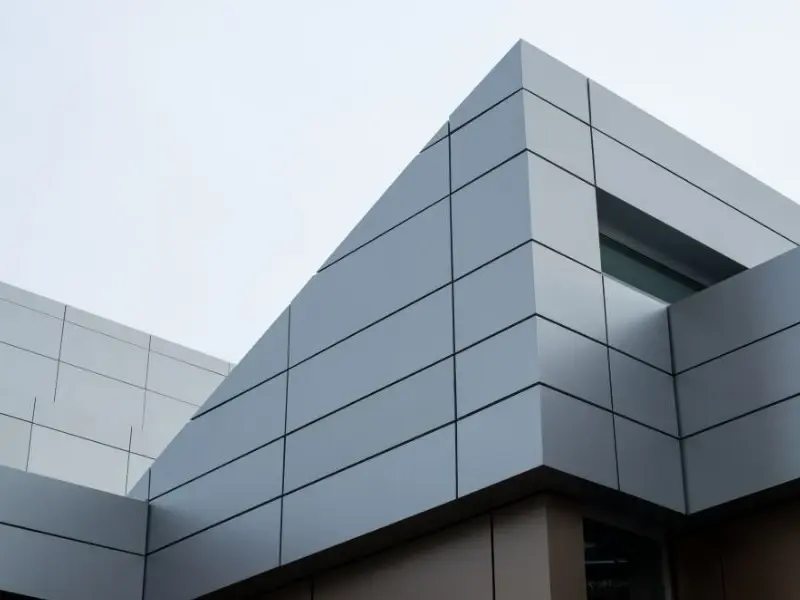
An aluminum facade is an exterior wall system built with aluminum components — including panels, frames, and cladding — that form the visible outer layer of a building. Unlike traditional brick or concrete finishes, aluminum facade systems are modular, fast to install, and available in a wide range of colors and textures.
| Feature | Detail |
|---|---|
| Core material | Aluminum alloy (typically 1100, 3003, 5052, 6063) |
| Surface finish | Anodized, powder-coated, PVDF, brushed, mirror |
| Panel thickness | 2 mm – 6 mm (standard); up to 10 mm (industrial) |
| Weight | 4 – 12 kg/m² depending on system type |
| Lifespan | 30 – 50+ years with proper maintenance |
| Fire rating | A2 (non-combustible core) or B1 (fire retardant) |
Types of Aluminum Facade Systems
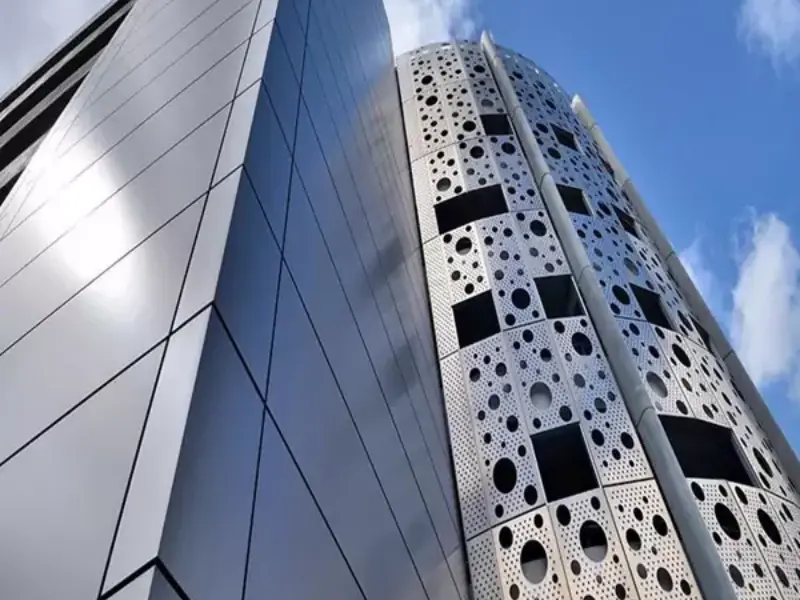
There are several distinct types of aluminum facade systems, each suited to different building requirements, budgets, and aesthetics.
| System Type | Description | Best For | Thickness Range |
|---|---|---|---|
| Curtain Wall | Non-load-bearing aluminum frame with glass or panel infill | High-rise commercial buildings | Frame: 50–200 mm depth |
| Rainscreen Cladding | Ventilated cavity system that drains water away from the wall | Residential, education, healthcare | Panel: 2–4 mm |
| Composite Panel (ACP) | Two aluminum sheets bonded to a polyethylene or mineral core | Retail, signage, renovation | 3 mm / 4 mm / 6 mm |
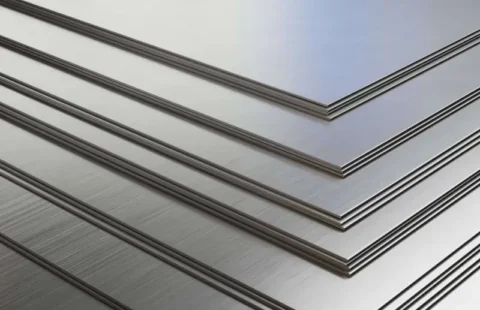
| Solid Aluminum Panel | Single-sheet aluminum with deep ribs for rigidity | Premium facades, civic buildings | 3 mm – 6 mm |
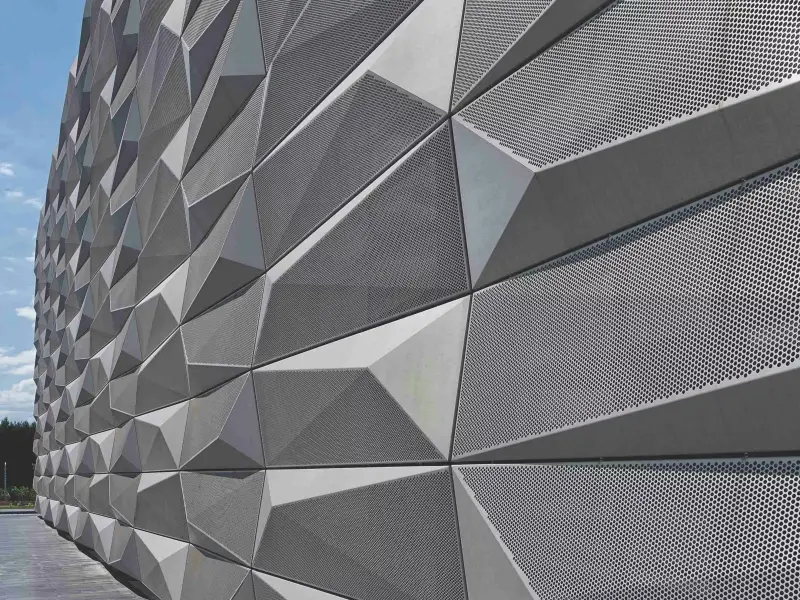
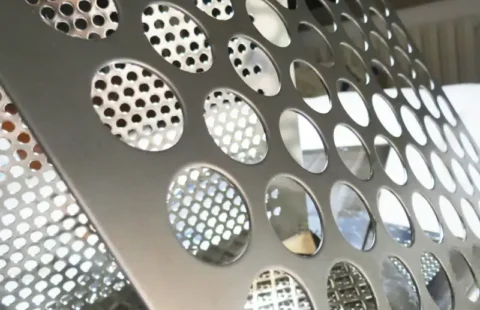
| Perforated Panel | Panels with patterned holes for light, ventilation, and design | Parking structures, feature walls | 2 mm – 4 mm |
| Cassette Panel | Folded aluminum cassettes clipped onto a subframe | Offices, industrial facades | 1.5 mm – 3 mm |
| Profiled / Corrugated | Ribbed or corrugated aluminum sheet for industrial use | Warehouses, factories | 0.7 mm – 1.5 mm |
Aluminum Facade Panels – Key Specifications
| Spec | Standard Range | Heavy / Industrial |
|---|---|---|
| Panel width | 600 – 1,500 mm | Up to 2,000 mm |
| Panel height | 1,000 – 4,000 mm | Up to 6,000 mm |
| Thickness | 2 mm – 4 mm | 5 mm – 10 mm |
| Alloy grade | 3003 / 5052 | 6061 / 6063 |
| Wind load resistance | 1.0 – 2.0 kPa | 2.5 – 5.0 kPa |
| Thermal expansion | 23 × 10⁻⁶ /°C | Same (design must allow for movement) |
| Color options | RAL standard range (200+ colors) | Custom PVDF / anodized finishes |
Aluminum Facade Cladding – How It Works
Aluminum facade cladding is installed over a building’s structural frame using a subframe system — typically made from aluminum or galvanized steel channels. The cladding panels are then fixed or clipped onto this subframe, leaving a ventilated cavity behind the panels.
| Cladding Layer | Function |
|---|---|
| Outer aluminum panel | Weather protection, aesthetics, UV resistance |
| Air cavity (20–50 mm) | Drainage, ventilation, thermal buffer |
| Insulation layer | Thermal and acoustic performance |
| Vapor control membrane | Prevents condensation inside the wall |
| Structural wall / substrate | Load-bearing support |
Metal Panel Facade Systems
Metal panel facade systems include aluminum as well as zinc, steel, and copper panels. Aluminum remains the most popular due to its low weight and corrosion resistance. Below is a quick comparison:
| Metal | Weight (kg/m²) | Corrosion Resistance | Cost Level | Typical Use |
|---|---|---|---|---|
| Aluminum | 4 – 12 | Excellent | Medium | Commercial, industrial, residential |
| Zinc | 7 – 14 | Very good (patina) | High | Prestige, heritage projects |
| Steel (galvanized) | 8 – 20 | Good (with coating) | Low–Medium | Industrial, warehouses |
| Copper | 9 – 15 | Excellent (patina) | Very High | Landmark, cultural buildings |
Industrial Aluminum Systems and Building Facade
In industrial construction, aluminum facade systems serve a dual purpose — they protect the building envelope and help meet strict performance standards for fire, thermal insulation, and weatherproofing. Common industrial applications include:
- 🏭 Warehouses and logistics centers – Corrugated or cassette aluminum panels for fast, cost-effective cladding
- 🏗️ Manufacturing plants – Heavy-gauge solid panels for durability and chemical resistance
- ⚡ Power and energy facilities – Aluminum systems with high wind-load ratings for exposed sites
- 🛫 Airports and transport hubs – Curtain wall and composite panel systems for large-span facades
- 🏥 Hospitals and laboratories – Hygienic smooth-surface panels with antibacterial coatings
- 🏫 Schools and universities – Rainscreen cladding systems for low maintenance and long lifespan
- 🅿️ Multi-story parking structures – Perforated aluminum panels for ventilation and visual screening
Aluminium Facade Jobs – Career Overview
The demand for skilled professionals in aluminium facade construction is growing worldwide. Here are the main roles in this sector:
| Job Title | Key Responsibilities | Experience Level |
|---|---|---|
| Facade Engineer | Structural analysis, load calculations, system design | Mid – Senior |
| Facade Installer / Fixer | On-site installation of panels and subframe systems | Entry – Mid |
| Facade Project Manager | Scheduling, procurement, subcontractor management | Senior |
| Facade Designer / Architect | Aesthetic design, material selection, detailing | Mid – Senior |
| Technical Sales Engineer | Client consultation, product specification, estimating | Mid |
| Quality Control Inspector | On-site checks, compliance with specs and standards | Mid |
How to Choose the Right Aluminum Facade System
| Your Project | Recommended System | Key Consideration |
|---|---|---|
| High-rise office tower | Curtain wall system | Wind load, thermal performance, glazing ratio |
| Retail or shopping center | ACP composite panel | Visual impact, color options, cost |
| Residential apartment block | Rainscreen cassette cladding | Fire rating (A2 core), insulation, maintenance |
| Warehouse or factory | Profiled / corrugated aluminum | Speed of installation, structural span |
| Civic or cultural building | Solid aluminum panel | Custom shape, premium finish, longevity |
| Parking structure | Perforated aluminum panel | Open area ratio, ventilation requirements |
Pro Tip: Always specify the alloy grade and surface finish when ordering aluminum facade panels. PVDF coatings offer the best color retention (20+ years). While anodized finishes provide superior scratch and abrasion resistance for high-traffic facades.
Frequently Asked Questions
What is an aluminium facade?
An aluminium facade is the exterior cladding layer of a building made from aluminum panels, profiles, or composite sheets. It protects the building structure and defines its visual appearance.
What are the main types of aluminum facade systems?
The main types of aluminum facade systems include curtain wall, rainscreen cladding, aluminum composite panels (ACP)。olid aluminum panels, cassette systems, perforated panels, and profiled/corrugated sheeting.
How thick are aluminum facade panels?
Standard aluminum facade panels range from 2 mm to 6 mm for most commercial applications. Industrial and high-load panels can be 8–10 mm thick.
Are aluminum facade systems fire-safe?
Yes, when specified correctly. Look for panels with a mineral or A2-rated core — these meet the highest fire safety standards and are required for buildings above 18 m in many countries.
How long does an aluminum facade last?
A well-maintained aluminum facade typically lasts 30 to 50+ years. PVDF-coated panels carry manufacturer warranties of 20–25 years for color and gloss retention.
Leave a Comment
You must be logged in to post a comment.