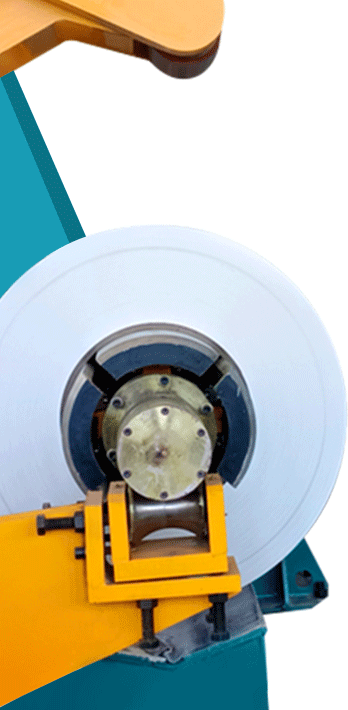
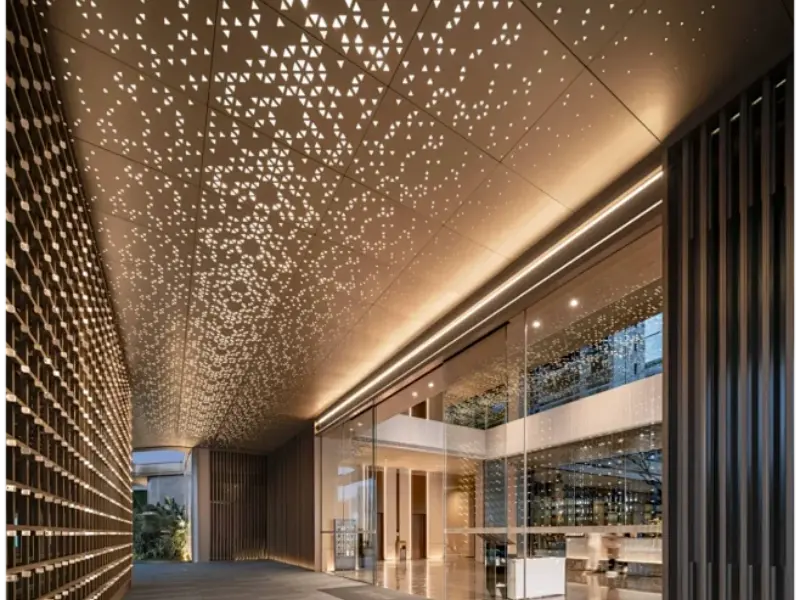
Perforated aluminium ceiling systems are widely used in commercial buildings, airports, offices, hospitals, shopping malls, subway stations, schools, and modern architectural projects.
A perforated aluminium ceiling has small holes on the surface. These holes improve sound absorption, ventilation, and decorative appearance. Different perforation patterns, colors, thicknesses, and ceiling systems are available for different projects.
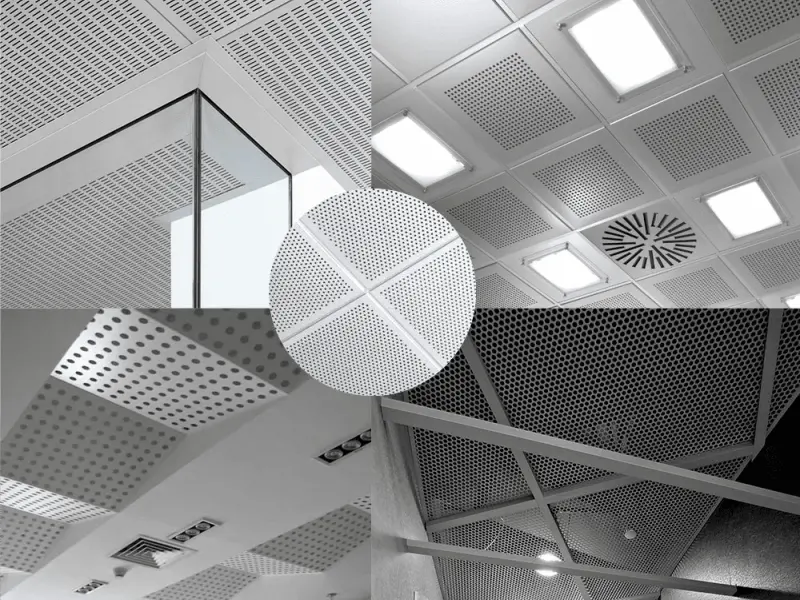
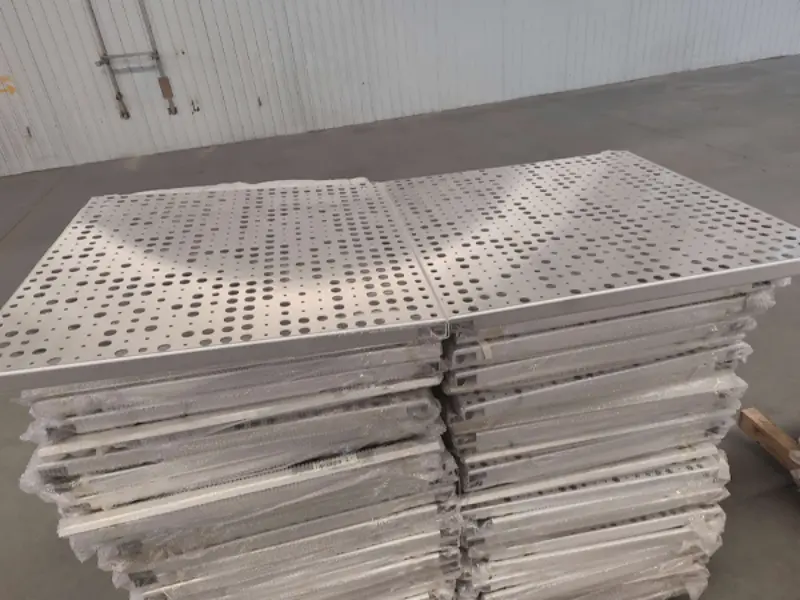
This product is popular because it is lightweight, durable, corrosion resistant, and easy to install.
Common Aluminium Alloys for Ceiling Panels
3003 Aluminium Ceiling Panel
3003 aluminum is one of the most common ceiling materials.
| Alloy | Feature |
|---|---|
| 3003 | Good corrosion resistance |
Applications:
- Office ceilings
- Shopping malls
- Commercial buildings
5005 Aluminium Ceiling Panel
5005 alloy provides better anodizing quality.
| Alloy | Advantage |
|---|---|
| 5005 | Decorative surface finish |
Applications:
- Interior decoration
- Airport ceilings
- Hotel projects
5052 Aluminium Ceiling Panel
5052 alloy has better strength and corrosion resistance.
Applications:
- Coastal buildings
- Humid environments
- Industrial ceilings
Perforated Aluminium Ceiling Panel Types
Lay In Perforated Aluminium Ceiling Tile
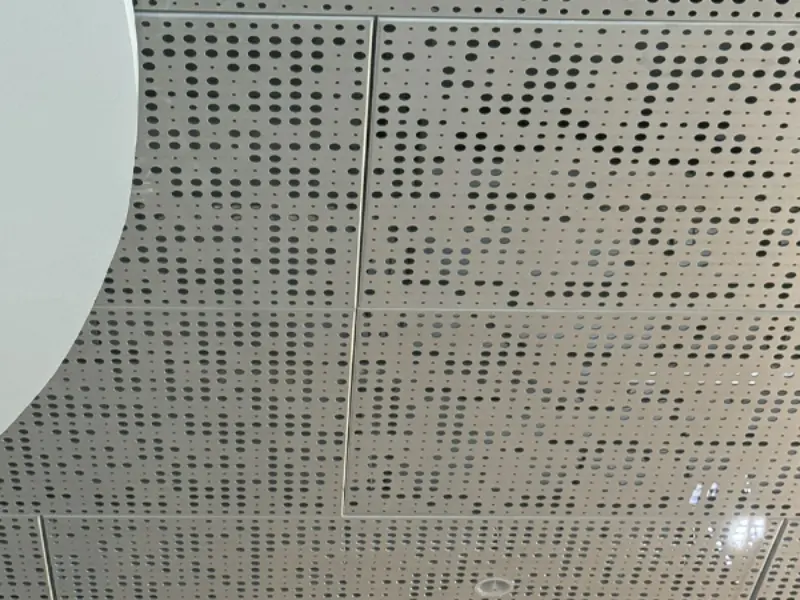
Lay in ceiling tiles are easy to install and replace.
Common sizes:
| Size | Thickness |
|---|---|
| 300 × 300mm | 0.5mm – 0.8mm |
| 600 × 600mm | 0.6mm – 1.0mm |
| 600 × 1200mm | 0.7mm – 1.2mm |
Advantages:
- Easy maintenance
- Fast installation
- Clean appearance
Clip In Perforated Ceiling Panel
Clip-in systems provide hidden suspension structures.
Benefits:
- Modern appearance
- Smooth ceiling surface
- Better panel alignment
Applications:
- Airports
- Offices
- Hotels
Perforated Aluminium Suspended Ceiling
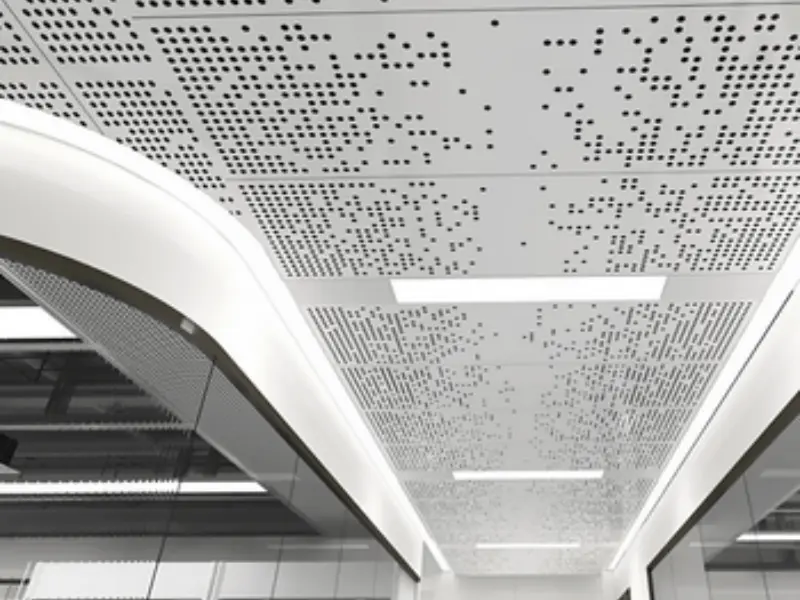
Suspended ceiling systems are widely used in commercial projects.
Features:
- Space for cables and pipes
- Easy maintenance
- Acoustic improvement
Applications:
- Hospitals
- Schools
- Subway stations
- Office buildings
Aluminium Perforated Metal Ceiling
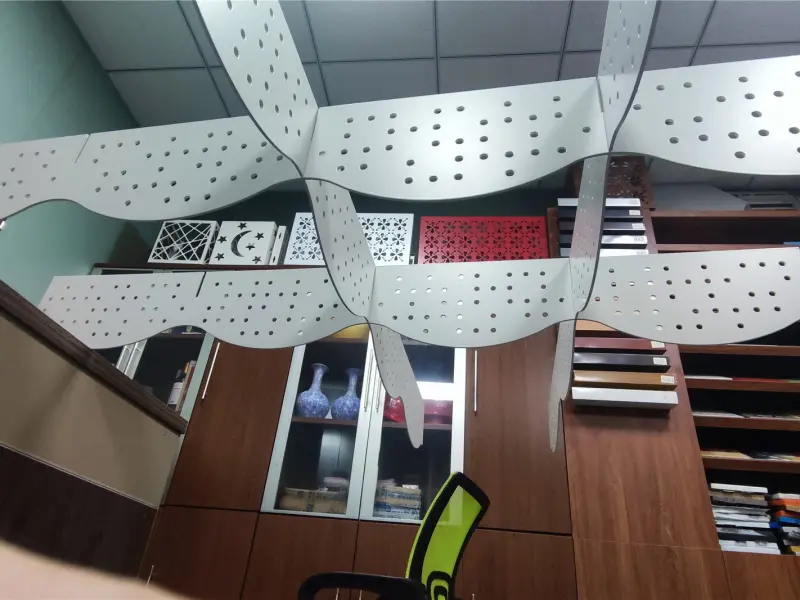
Metal ceiling panels are suitable for modern architecture.
Advantages:
- Lightweight material
- Fire resistance
- Long service life
- Corrosion resistance
Non Perforated Aluminium Ceiling
Some projects use non perforated aluminum ceiling panels.
Difference Between Perforated and Non Perforated Ceiling
| Item | Perforated Ceiling | Non Perforated Ceiling |
|---|---|---|
| Acoustic effect | Better | Lower |
| Appearance | Decorative | Smooth |
| Air circulation | Better | Normal |
| Cleaning | Easy | Easy |
Non perforated ceiling panels are often used in clean rooms and decorative projects.
Aluminium Ceiling Tile Lay In Perforated
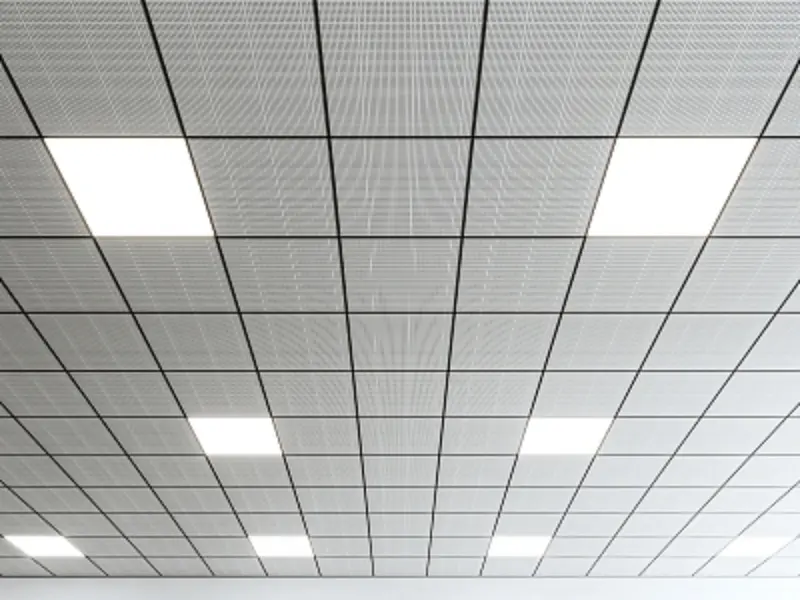
Lay-in perforated ceiling tiles are very common in office buildings.
Popular hole types:
| Hole Pattern | Common Diameter |
|---|---|
| Round hole | 1.8mm |
| Round hole | 2.2mm |
| Square hole | 3mm |
| Slotted hole | Custom |
Acoustic fleece can be added behind the panel for better sound absorption.
Aluminium Perforated Sheet Ceiling Thickness
Different projects require different thicknesses.
| Thickness | Application |
|---|---|
| 0.5mm | Residential ceiling |
| 0.6mm | Office ceiling |
| 0.8mm | Commercial ceiling |
| 1.0mm | Large public projects |
| 1.2mm | Airport ceiling |
Surface Finish Options
Powder Coated Aluminium Ceiling
Powder coating is widely used for indoor ceilings.
Available colors:
- White
- Black
- Silver
- Gray
- Wood grain
PVDF Coated Aluminium Ceiling
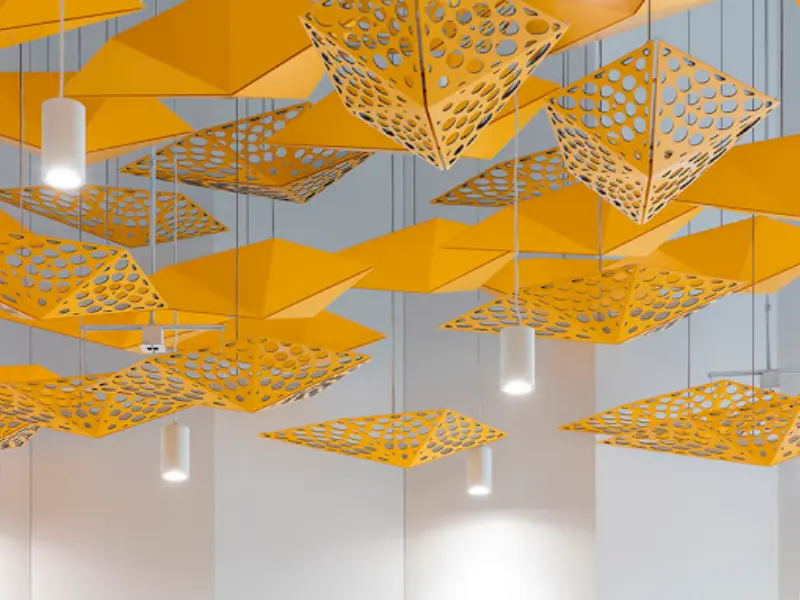
PVDF coating provides better weather resistance.
Applications:
- Outdoor ceiling systems
- Metro stations
- Exterior soffits
Anodized Aluminium Ceiling
Anodized surfaces provide:
- Better corrosion resistance
- Decorative metallic appearance
- Long service life
Perforated Aluminium False Ceiling
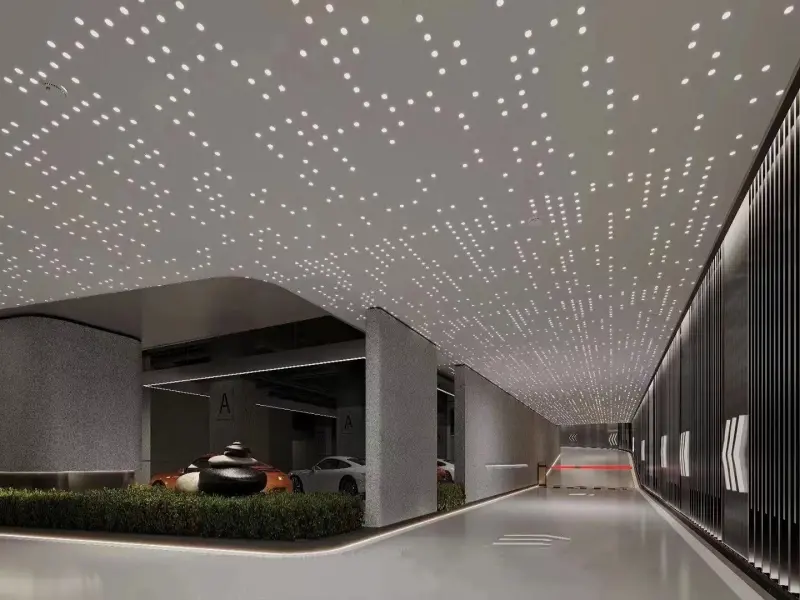
False ceilings improve interior appearance and hide building systems.
Benefits:
- Hide wires and pipes
- Reduce noise
- Improve lighting design
- Modern architectural appearance
Applications:
- Hotels
- Restaurants
- Offices
- Hospitals
Aluminium Perforated Ceiling Price
The final price depends on:
- Alloy
- Thickness
- Hole pattern
- Surface finish
- Ceiling system
- Order quantity
Reference Price
| Product Type | Estimated Price |
|---|---|
| Standard perforated ceiling tile | USD 6 – 15/m² |
| PVDF coated ceiling panel | USD 10 – 25/m² |
| Acoustic perforated ceiling | USD 12 – 30/m² |
| Custom perforated ceiling | Depends on design |
Prices may vary according to project requirements and export markets.
Common Hole Patterns
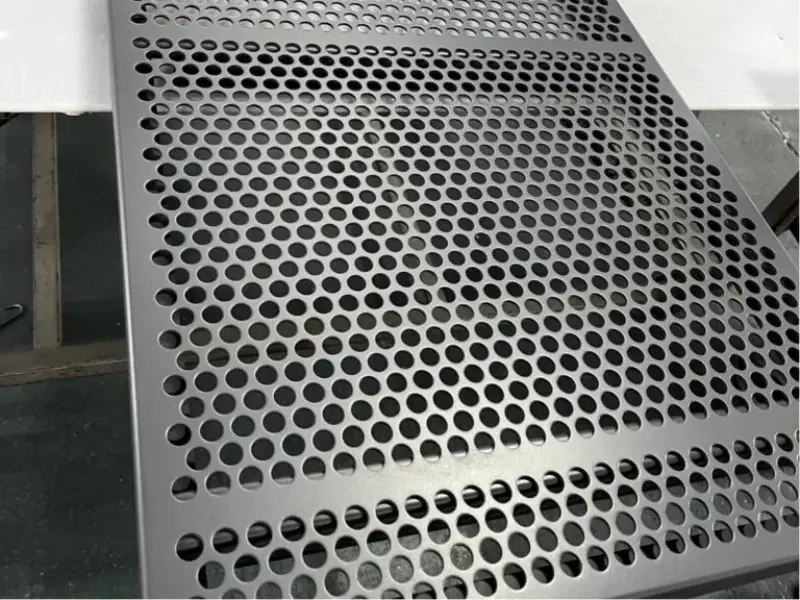
Round Hole Ceiling Panel
Most common pattern.
Advantages:
- Better acoustic performance
- Simple appearance
- Easy production
Square Hole Ceiling Panel
Square perforation provides a modern visual effect.
Applications:
- Shopping malls
- Commercial spaces
- Exhibition halls
Customized Perforated Ceiling Design
Custom patterns are available for architectural projects.
Options include:
- Logo patterns
- Decorative graphics
- Geometric designs
Comparison of Acoustic and Solid Panels
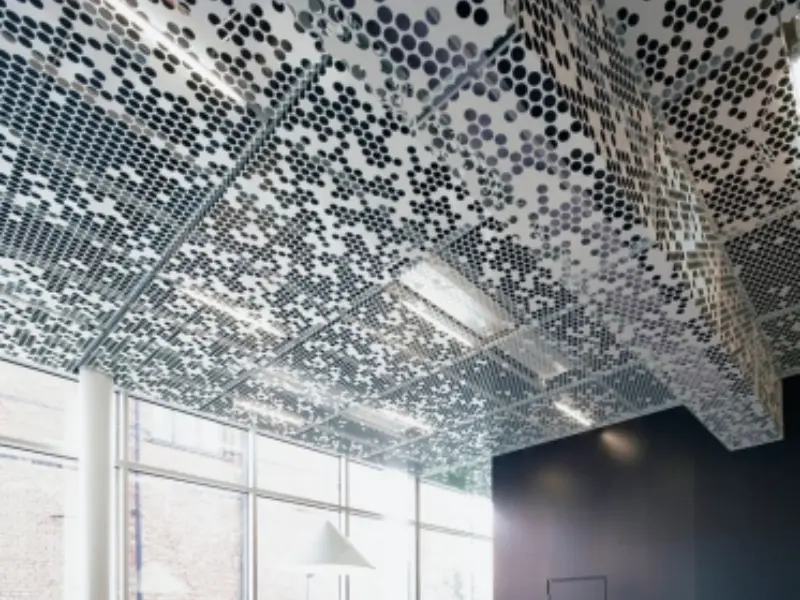
| Feature | Perforated Panel | Non-Perforated Panel |
|---|---|---|
| Sound Absorption | Excellent (with tissue) | Poor (reflects sound) |
| Visual Texture | Matte or patterned | Smooth and reflective |
| Cleaning | Requires vacuuming/air | Easy to wipe |
| Primary Use | Offices, Airports, Malls | Kitchens, Hospitals, Labs |
Understanding the Cost Factors
The aluminium perforated ceiling price depends on more than just the metal. Several factors will change your quote.
- Hole Density: A panel with more holes takes longer to punch and uses more tool energy.
- Thickness: A 0.8mm panel is much more expensive than a 0.5mm panel because it uses more raw material.
- Surface Coating: Polyester powder coating is standard. PVDF coating is more expensive but lasts longer under bright lights or near the coast.
- Quantity: Ordering standard sizes like 600×600mm in bulk usually lowers the price.
Patterns and Aesthetics
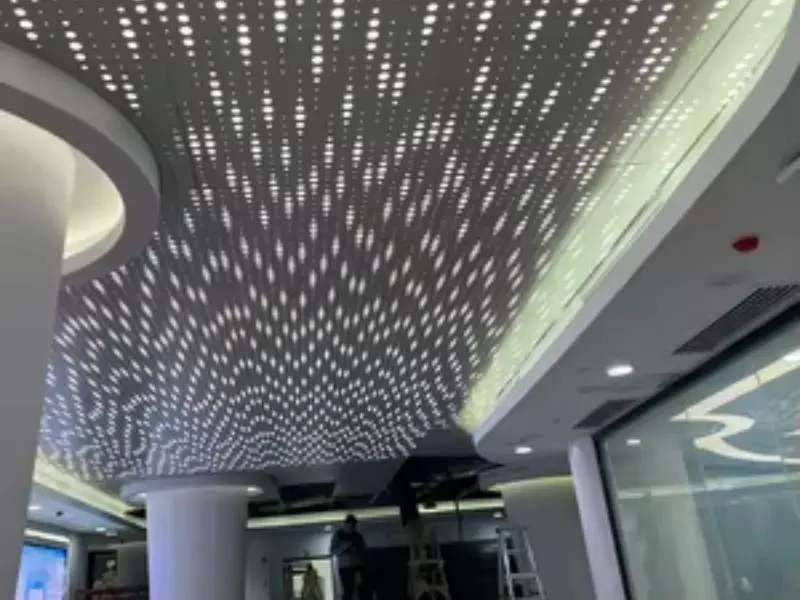
The holes in a perforated aluminium ceiling do not have to be simple circles.
Standard Round Holes
These are the most affordable and common. They provide a classic look that fits almost any building.
Micro-Perforation
These holes are very tiny, often less than 1.0mm. From a distance, the ceiling looks solid. However, it still provides excellent sound absorption. This is a “premium” look for modern boardrooms.
Square and Rectangular Holes
These patterns offer a more geometric and architectural feel. They are often used in designer retail spaces to create a specific “vibe.”
Challenges of Using Metal Ceilings
Every material has trade-offs. What are the disadvantages of metal false ceilings?
- Initial Cost: Aluminium is more expensive than gypsum or mineral fiber boards.
- Thermal Conductivity: Metal transfers heat quickly. If the area above the ceiling is very cold, the metal tiles might feel cold too.
- Vibration Noise: If not installed correctly with gaskets, metal panels can sometimes rattle if there is heavy machinery nearby.
Installation Environments
You will find these ceilings in many professional settings.
- Transportation Hubs: Airports and train stations use perforated aluminium ceiling panels to handle the noise of large crowds.
- Public Offices: Used to keep the environment quiet so workers can focus.
- Commercial Kitchens: Often use the non perforated aluminium ceiling version because it does not trap grease in holes.
- Exterior Soffits: Aluminium handles humidity well, so it is perfect for the underside of outdoor roof overhangs.
Surface Finishes and Colors
The final look of your perforated aluminium false ceiling is determined by the coating.
Powder Coating
This is the most popular finish. It is durable and comes in any RAL color. Most people choose “Traffic White” (RAL9010) because it reflects light well and makes rooms feel larger.
Wood Grain Heat Transfer
You can make your metal ceiling look like wood. A special film is pressed onto the aluminium using heat. It gives you the beauty of timber with the fire safety of metal.
Anodized Finish
Anodizing gives the metal a metallic sheen. It looks very high-tech. It is very hard to scratch and is perfect for high-traffic areas where people might touch the walls or ceilings.
How to Calculate Your Requirements
When ordering an aluminium perforated metal ceiling, you must calculate the “Open Area Percentage.” This is the amount of the sheet that is made of holes.
For example, a typical acoustic ceiling has an open area of 15% to 22%. If the percentage is too low, sound absorption is poor. If it is too high, the panel might become too weak and start to bend.
Conclusion on Choosing Your Ceiling
The perforated aluminium ceiling is a top-tier choice for modern construction. It solves the problem of noise while providing a clean, professional appearance. Whether you choose the aluminium ceiling tile lay in perforated style for easy access or a custom perforated aluminium ceiling panel for a unique design, the durability of aluminium ensures a long-lasting finish.
Remember to consider the alloy, the thickness, and the acoustic backing when comparing the aluminium perforated ceiling price. By choosing the right specifications, you create a space that looks great and sounds even better.
Can You Use Corrugated Metal for a Ceiling?
Yes. Corrugated metal can be used for ceiling decoration.
Advantages of Corrugated Metal Ceiling
- Industrial appearance
- Lightweight material
- Decorative style
- Easy installation
However, perforated aluminum ceilings usually provide better acoustic performance.
What Are the Disadvantages of Metal False Ceilings?
Although metal ceilings have many advantages, there are also some limitations.
| Disadvantage | Description |
|---|---|
| Higher cost | More expensive than gypsum |
| Sound reflection | Non-acoustic panels may reflect noise |
| Dent risk | Thin panels can deform |
| Installation accuracy | Requires proper suspension system |
Choosing perforated acoustic panels can reduce sound reflection problems.
Applications
Office Buildings
Benefits:
- Modern appearance
- Better acoustics
- Easy maintenance
Airport Ceiling Systems
Airports require durable and fire-resistant ceiling systems.
Features:
- Large panel sizes
- Acoustic performance
- Long service life
Hospital Ceiling Projects
Hospitals use perforated aluminum ceilings because they are:
- Easy to clean
- Corrosion resistant
- Hygienic
Shopping Mall Ceilings
Shopping centers often use decorative perforated panels.
Advantages:
- Attractive appearance
- Lighting integration
- Noise reduction
Subway and Railway Stations
Transportation projects require durable ceiling systems.
Benefits:
- Fire resistance
- Strong durability
- Low maintenance
Standard Ceiling Panel Sizes
| Ceiling Type | Standard Size |
|---|---|
| Lay in tile | 600 × 600mm |
| Clip in panel | 600 × 1200mm |
| Strip ceiling | Custom |
| Baffle ceiling | Custom |
Custom sizes are also available.
What Is Perforated Aluminium Ceiling?
A perforated aluminium ceiling is a metal ceiling panel with punched holes.
The perforations can improve:
- Acoustic performance
- Air circulation
- Decorative appearance
- Light diffusion
The ceiling panels are usually made from aluminum alloy sheets and installed with suspended ceiling systems.
What Is the Purpose of a Perforated Ceiling?
Perforated ceilings are mainly used for:
| Purpose | Benefit |
|---|---|
| Sound absorption | Reduce noise |
| Ventilation | Improve airflow |
| Decoration | Modern appearance |
| Lighting effect | Better light distribution |
| Fire resistance | Safe building material |
Perforated ceiling panels are common in large public buildings where noise control is important.
What Is Perforated Aluminium?
Perforated aluminium is aluminum sheet with punched holes or patterns.
The holes can be:
- Round holes
- Square holes
- Slotted holes
- Hexagonal holes
- Customized patterns
Perforated aluminum products are widely used for:
- Ceilings
- Facades
- Wall cladding
- Screens
- Acoustic panels
Packaging and Export
Ceiling panels are usually packed with:
- Protective film
- Carton box
- Wooden pallet
- Corner protection
Main export markets:
- Singapore
- UAE
- Australia
- USA
- Saudi Arabia
- Southeast Asia
Why Choose Aluminium Ceiling Instead of Steel Ceiling?
| Property | Aluminium Ceiling | Steel Ceiling |
|---|---|---|
| Weight | Light | Heavy |
| Corrosion resistance | Excellent | Lower |
| Installation | Easy | Harder |
| Decorative finish | Better | Medium |
| Outdoor durability | Strong | Medium |
Aluminum ceiling systems are preferred for modern commercial buildings.
FAQ
What is the purpose of a perforated ceiling?
Perforated ceilings improve sound absorption, ventilation, and decoration.
What is perforated aluminium?
It is aluminum sheet with punched holes or decorative patterns.
What are the disadvantages of metal false ceilings?
Metal ceilings may cost more and require accurate installation systems.
Can you use corrugated metal for a ceiling?
Yes. Corrugated metal can be used for decorative ceiling applications.
What alloy is commonly used for aluminium ceiling panels?
3003, 5005, and 5052 are common alloys.
What thickness is used for perforated ceiling panels?
Common thickness ranges from 0.5mm to 1.2mm.
Can custom hole patterns be produced?
Yes. Customized perforation designs are available.
Perforated Aluminium Ceiling Supplier
A professional supplier can provide:
- Custom perforation design
- Acoustic ceiling solutions
- Powder coated panels
- PVDF coated ceiling panels
- OEM ceiling fabrication
WORTHWILL ALUMINUM supplies perforated aluminium ceiling panels, suspended ceiling systems, aluminum ceiling tiles, and decorative perforated metal panels for global projects.
Perforated Aluminum Ceiling Panel Tiles Manufacturer
Perforated aluminum ceiling systems are widely used in modern architecture because of their acoustic performance, decorative appearance, and corrosion resistance.
Different alloys, perforation patterns, thicknesses, and surface finishes can meet different project requirements.
For commercial buildings, transportation projects, hospitals, and public spaces, perforated aluminum ceiling panels remain a reliable and modern solution.