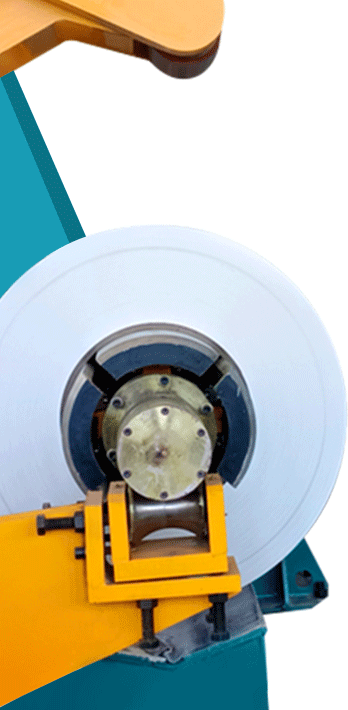
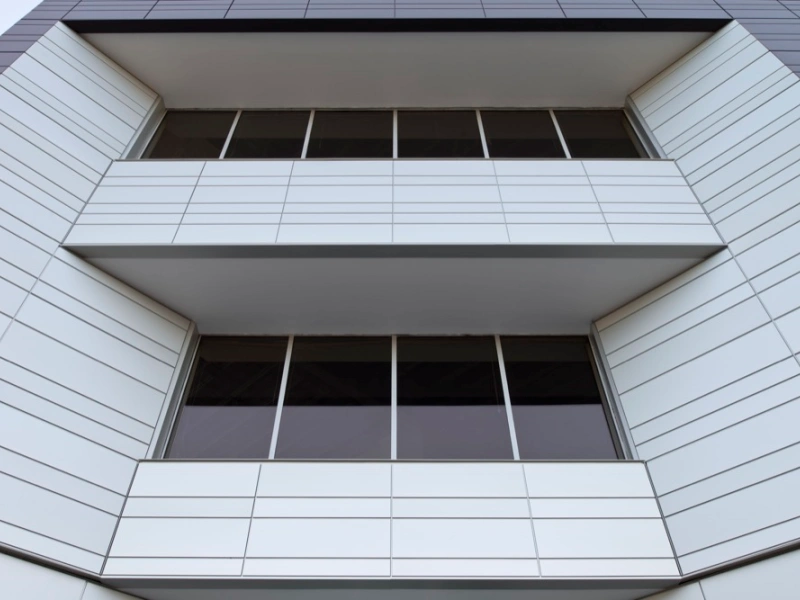
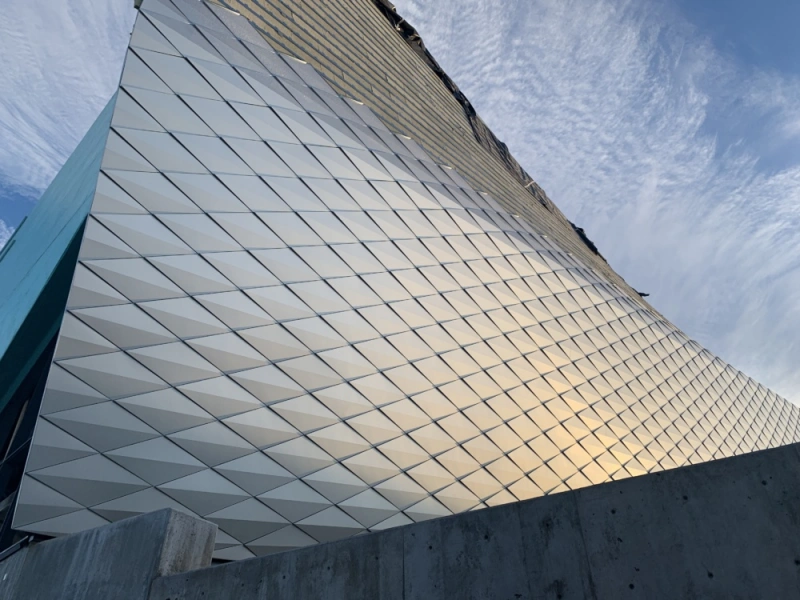
The anodized aluminum facade is a sophisticated and highly durable cladding solution that has become a cornerstone of contemporary architectural design. Renowned for its unique aesthetic appeal, exceptional corrosion resistance, and long-lasting performance, an anodized aluminium facade offers a premium finish that stands the test of time.


Classification
The classification of an anodized aluminium facade helps define its characteristics and suitability for different projects. Facade panels can be classified by their form, finish, and installation method:
- By Panel Form:
- Solid Anodized Aluminum Panels: Sheets of solid aluminum are anodized and then fabricated into flat panels, cassettes, or custom shapes. These offer pure metallic aesthetics.
- Anodized Aluminum Composite Panels (ACP): These consist of two thin aluminum sheets (with an anodized finish) bonded to a non-aluminum core.
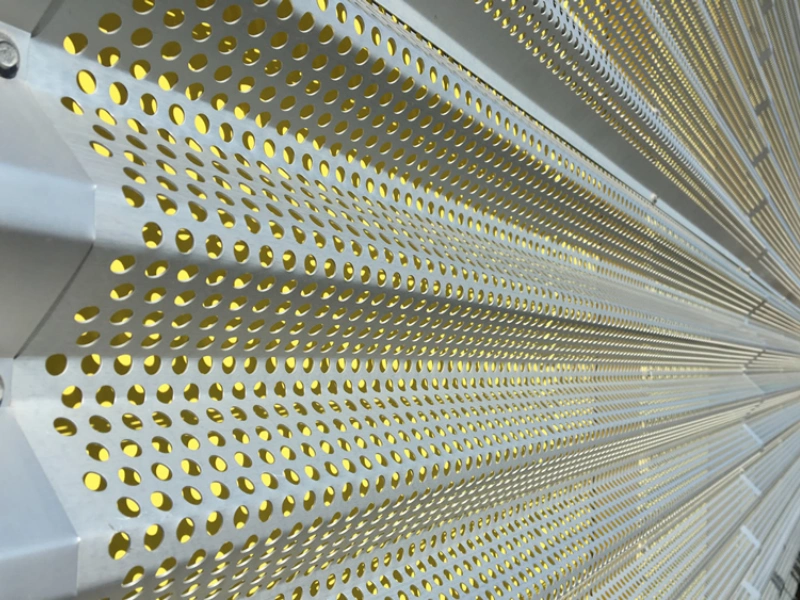
- Perforated Anodized Aluminum: Panels that have been perforated or laser-cut with various patterns.
- Expanded Mesh Anodized Aluminum: Aluminum sheets that are slit and stretched to create a diamond-shaped pattern.
- By Anodizing Finish Type:
- Clear Anodized (Natural): A transparent oxide layer that enhances the natural metallic sheen of the aluminum, ranging from matte to bright.
- Color Anodized: Achieved by incorporating organic or inorganic pigments into the anodized layer, producing colors like bronze, black, champagne, and various shades of grey.
- Specialty Finishes: Includes pre-treatments like brushed, polished, or sand-blasted surfaces before anodizing, creating unique textures and light reflections.
- By Installation System:
- Cassette Panel System: Panels are formed into boxes (cassettes) and mounted onto a sub-frame.
- Flat Sheet System: Anodized aluminum sheets are fastened directly to the building structure or a sub-frame.
- Rainscreen System: An anodized aluminum facade is as the outer layer of a rainscreen system.
Thickness
The thickness of the aluminium material used for an anodized aluminium facade is a critical factor influencing its structural integrity, flatness, impact resistance, and overall cost. Selecting the appropriate thickness is essential for ensuring the facade’s long-term performance and aesthetic appeal.
For solid aluminum panels, common thicknesses range from 2mm to 5mm. Thicker panels generally offer greater rigidity and resistance to oil-canning (visual waviness). For Anodized ACP, while the overall panel thickness can be 3mm, 4mm, or 6mm, it’s the thickness of the individual aluminum skins (e.g., 0.5mm per skin) that contributes to the anodized finish and surface durability.
Table of Common Thicknesses for Anodized Aluminium Facade Components:
| Material Type | Component Thickness (mm) | Typical Application for Anodized Aluminum Facade | Key Feature |
|---|---|---|---|
| Solid Anodized Aluminum Panel | 2.0 – 3.0 | Wall cladding, soffits, interior features | Good flatness, cost-effective |
| Solid Anodized Aluminum Panel | 4.0 – 5.0 | High-rise facades, large format panels, high-impact areas | Superior rigidity, enhanced wind resistance |
| Anodized ACP (Aluminum Skin) | 0.3 – 0.5 (per skin) | General facade cladding, column covers | Excellent flatness, lightweight overall panel |
| Anodized Layer (Microns) | 15 – 25 | Standard architectural anodizing | Corrosion protection, consistent color |
| Anodized Layer (Microns) | 25+ | High-performance, coastal, harsh environment applications | Enhanced durability, extreme weather resistance |
Alloy Choices for Anodized Aluminum Facade
The specific alloy of aluminum chosen for an anodized aluminum facade significantly impacts the quality and consistency of the anodized finish, as well as the mechanical properties of the panel.
- AA 5005 Alloy: This is often the preferred alloy for architectural anodizing. It contains a small percentage of magnesium, which contributes to its excellent corrosion resistance and, critically, ensures a very consistent and clear finish after the anodizing process.
- AA 3003 Alloy: A common general-purpose alloy, 3003 is often used for its good formability and corrosion resistance.
- AA 6063 Alloy: Known for its good extrudability and finishing characteristics, 6063 is primarily used for extruded aluminum profiles.
The correct alloy selection ensures that the anodized aluminum facade not only meets the structural requirements but also achieves the desired aesthetic quality and long-term finish.
Packaging of Anodized Aluminium Facade
The integrity of an anodized aluminium facade is heavily reliant on careful packaging to prevent surface damage during transit and storage.
Effective packaging for anodized aluminum facade panels typically includes:
- Protective Film
- Wooden Crates or Pallets
- Edge and Corner Protection
- Desiccants
- Securing Straps
- Identification
Meticulous packaging safeguards the premium finish of the anodized aluminum facade, ensuring it arrives in perfect condition, ready for installation.
Applications of Anodized Aluminium Facade
The sophisticated appeal and robust properties of an anodized aluminum facade make it a preferred material for a wide array of architectural applications:
- Commercial Buildings:
- Office towers and corporate headquarters.
- Retail complexes and shopping malls.
- Hotels and hospitality venues.
- Public and Institutional Buildings:
- Museums and art galleries.
- Airports and transportation hubs.
- Educational institutions.
- Hospitals and healthcare facilities.
- High-End Residential Developments:
- Luxury apartment buildings.
- Modern custom homes.
- Interior Design:
- Feature walls and decorative panels.
- Ceiling systems and partitions.
- Renovation Projects:
- Modernization of existing building exteriors.
- Adding a contemporary look to older structures.
Types and Digital Specifications of Anodized Aluminum Facade
Here’s a table outlining common types of anodized aluminum facade panels with their typical specifications:
| Facade Panel Type | Anodizing Finish | Overall Panel Thickness (mm) | Max Panel Size (Width x Length) | Aluminum Skin Thickness (mm, if ACP) | Anodized Layer (Microns) | Key Features & Advantages |
|---|---|---|---|---|---|---|
| Solid Aluminum Cassette | Clear, Bronze, Black | 3.0, 4.0, 5.0 | 1500 x 4000 | N/A | 15 – 25 | Pure metal look, high durability, excellent flatness |
| Anodized Aluminum Composite Panel (ACP) | Clear, Champagne, Light Bronze | 3.0, 4.0, 6.0 | 1500 x 6000 | 0.3 – 0.5 | 10 – 20 | Lightweight, superb flatness, rigid, cost-effective |
| Perforated Anodized Aluminum | Custom colors, Clear | 2.0, 3.0, 4.0 | 1250 x 3000 | N/A | 15 – 25 | Aesthetic patterns, sun shading, ventilation, acoustic properties |
| Brushed Anodized Aluminum | Clear, Smoke Grey | 3.0, 4.0 | 1200 x 3000 | N/A (for solid) | 15 – 20 | Textured finish, minimizes fingerprints, subtle sheen |
| Anodized Aluminum Rain Screen | Full range of colors | 3.0, 4.0, 5.0 | Custom | N/A or 0.5 (for ACP) | 15 – 25 | Enhanced weather protection, energy efficiency, ventilation |
Note: Specific dimensions, available finishes, and anodized layer thicknesses can vary significantly by manufacturer and project requirements. Always consult product data sheets.
Benefits of Anodized Aluminum Facade
Choosing an anodized aluminum facade for your project offers a multitude of compelling advantages:
- Superior Corrosion Resistance: The anodized layer provides an incredibly hard, non-porous surface that is highly resistant to weathering, salt spray, and industrial pollutants.
- Exceptional Durability: Unlike paints or coatings, anodizing is an integral part of the aluminum, meaning it won’t chip, peel, or flake, ensuring a long-lasting finish.
- UV Stability and Color Fastness: The anodized surface is highly resistant to UV degradation, preventing fading and chalking, thus maintaining its aesthetic appeal for decades.
- Low Maintenance: Requires minimal cleaning with just mild soap and water to maintain its appearance.
- Lightweight: Aluminum’s low density reduces structural load on the building and simplifies installation.
- Sustainable Choice: Aluminum is 100% recyclable, making an anodized aluminum facade an environmentally responsible building material.
- Non-Combustible: Solid aluminum panels are non-combustible, contributing to fire safety (check local regulations for ACP core materials).
Types and Specifications in Table Form
Here is a sample specification table for anodized aluminum facade panels:
| Type | Alloy | Thickness Range | Width (mm) | Length (mm) | Surface Finish | Color Options |
|---|---|---|---|---|---|---|
| Solid Aluminum Panel | 3003/5005 | 2.0–5.0 | 1000–2000 | 2000–6000 | Matte, Brushed, Polished | Silver, Black, Gold |
| Perforated Panel | 3003/5052 | 2.0–4.0 | 1000–1500 | 2000–5000 | Anodized, Brushed | Bronze, Champagne |
| Composite Panel | 3003/5005 | 3.0–6.0 | 1220–1570 | 2440–6000 | Satin, Glossy | Custom colors |
Frequently Asked Questions (FAQ)
Q1: What is the lifespan of an anodized aluminum facade?
A: Anodized aluminum facade panels can last 20–30 years with minimal maintenance.
Q2: Can anodized aluminum facade panels be customized in color?
A: Yes, colors like silver, black, bronze, champagne, and gold are common, but custom colors are also possible.
Q3: Are anodized aluminum facades eco-friendly?
A: Yes, aluminum is fully recyclable and sustainable.
Q4: How do I clean anodized aluminum facade panels?
A: Use mild soap and water with a soft cloth. Avoid abrasive materials.
Q5: Do anodized aluminum facades resist saltwater corrosion?
A: Yes, especially with alloys like 5052 and 5005, which are suitable for coastal areas.